
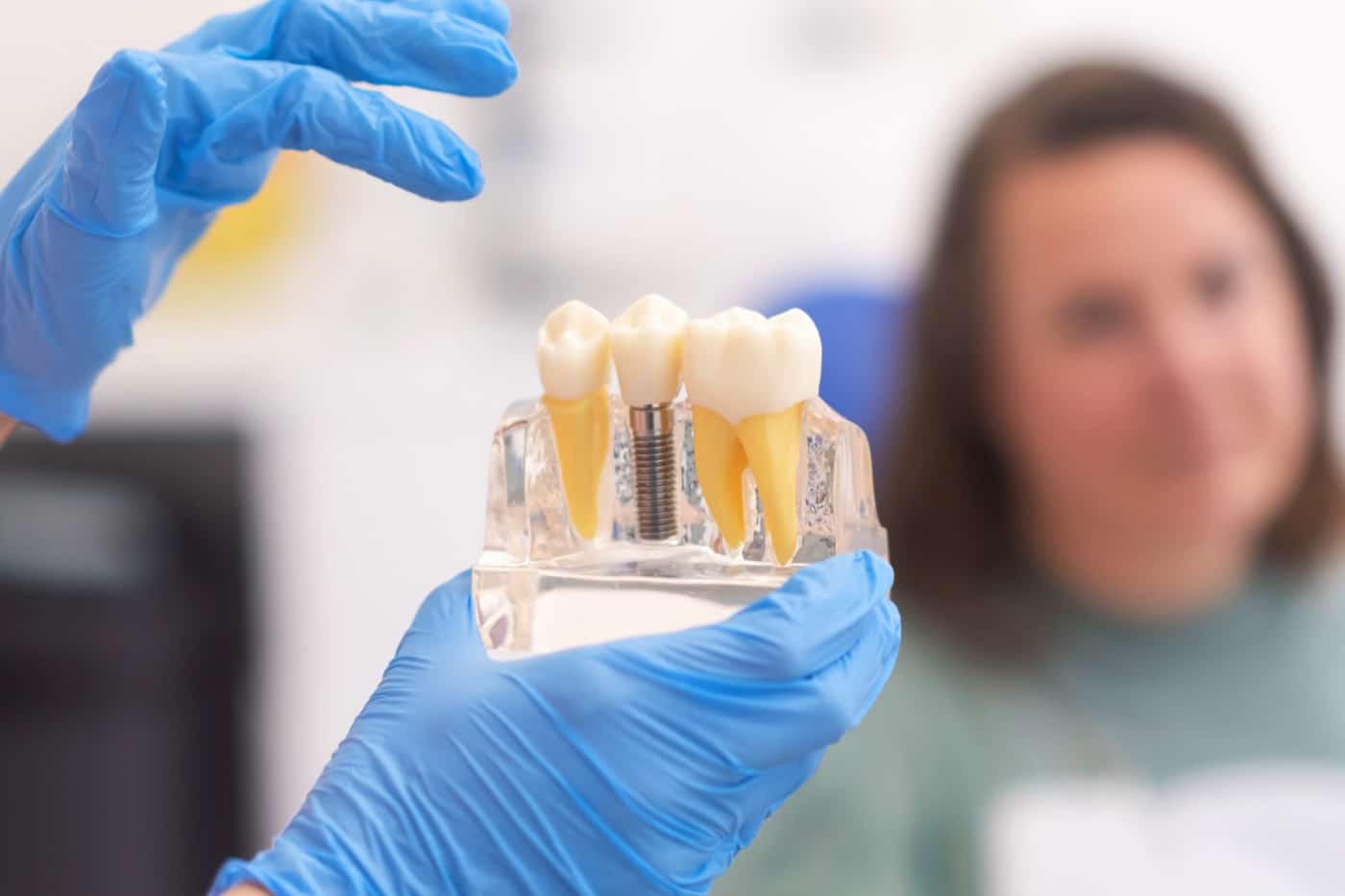
Options for missing teeth
How many teeth you are missing — and what you want your replacement teeth to do — shapes which implant option fits. Here is a plain comparison of the main paths.
Three starting points
Find your situation below. Your surgeon confirms which option your anatomy and health support at consultation.
One missing tooth
A single implant supports an individual crown.
- Replaces the tooth without reshaping or relying on the healthy neighboring teeth, unlike a traditional bridge.
- The implant supports the bone at the site, and the crown is cleaned and flossed much like a natural tooth.
- Your restorative dentist designs the crown to match the surrounding teeth.
Several missing teeth
A small number of implants can support a bridge spanning the gap.
- Not every missing tooth needs its own implant — an implant-supported bridge can replace several teeth on fewer implants.
- Avoids the hooks and pressure of a removable partial denture resting on remaining teeth and gums.
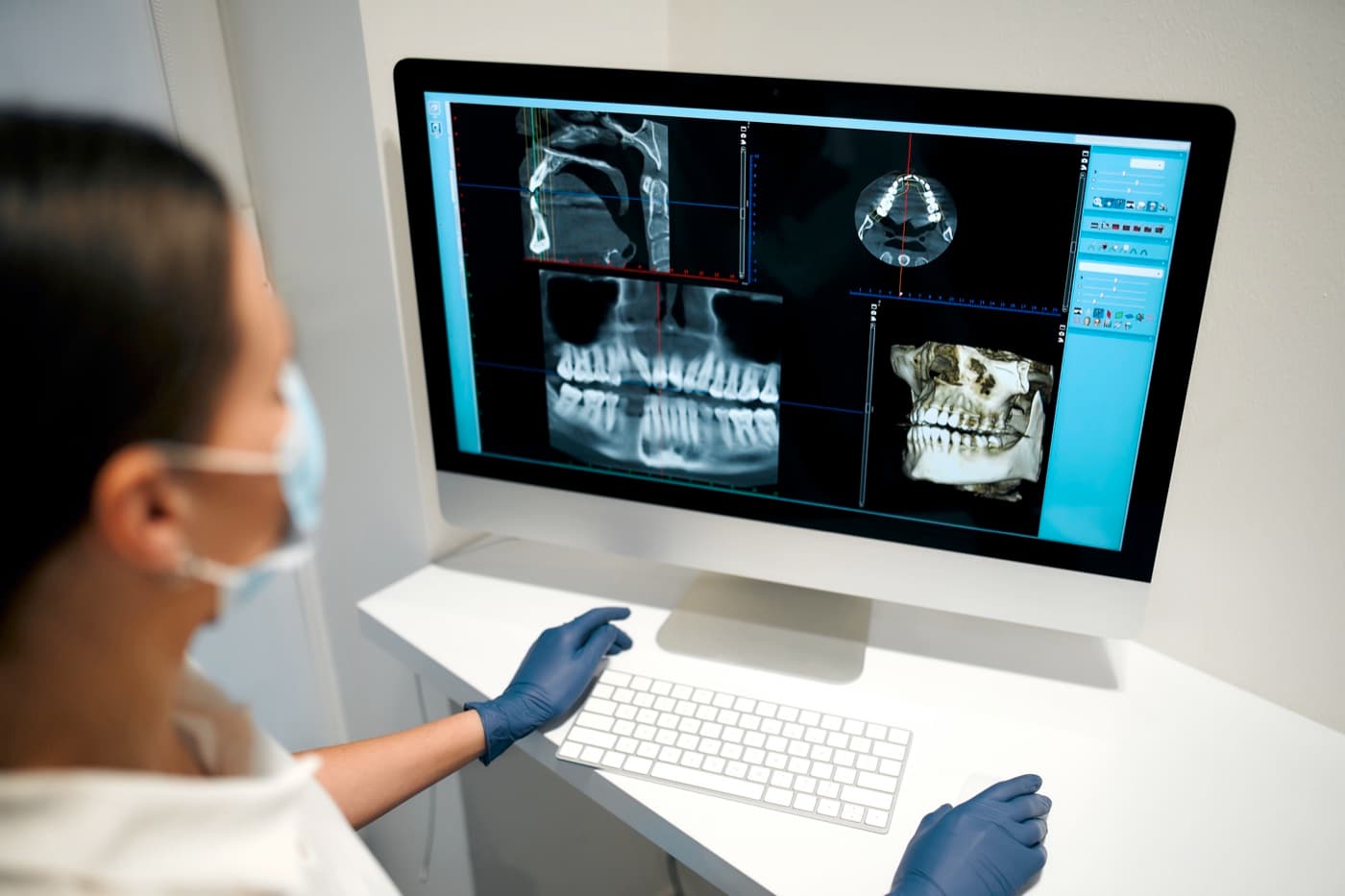
- The number and position of implants depends on your bone and bite, which your surgeon maps with 3D imaging.
All teeth in an arch
A set of implants supports a full upper or lower restoration.
- A complete arch of teeth can be supported on a set of implants — either fixed in place or removable-but-anchored.
- This is its own planning conversation, with dedicated candidacy, timeline, and cost considerations.
- See the full-arch page for fixed vs. removable comparisons and provisional-teeth details.
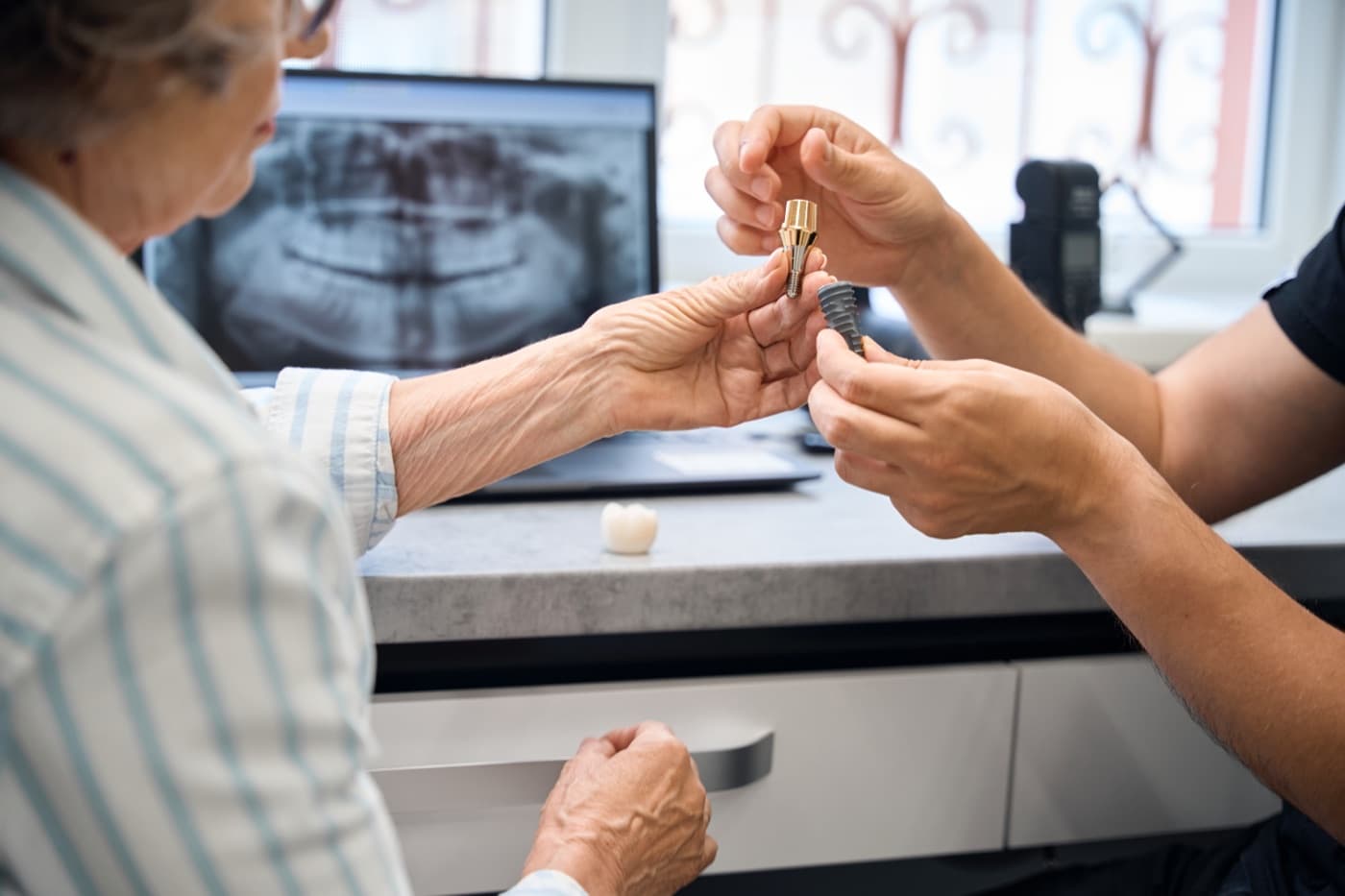
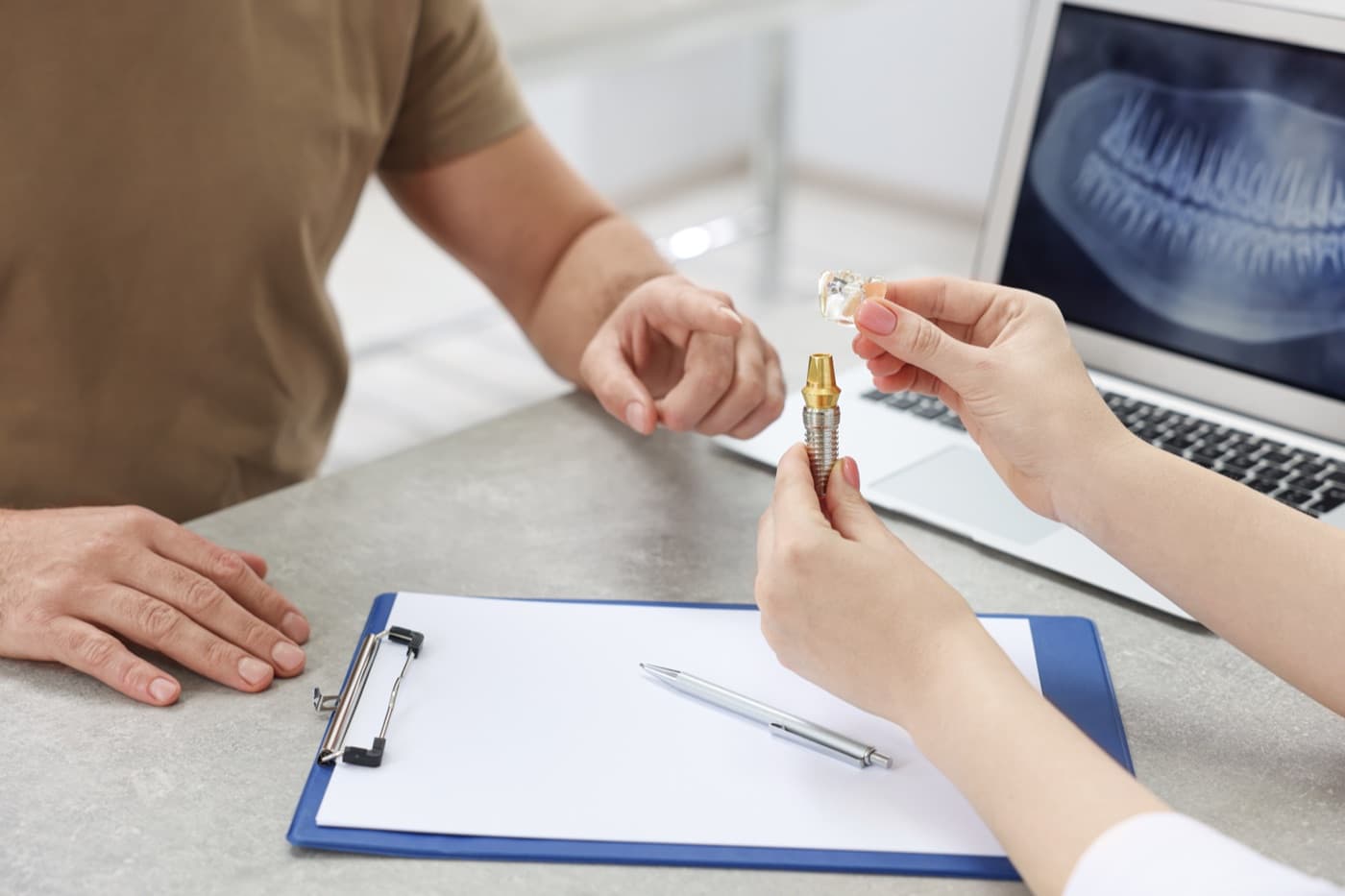
The right option starts with your goals.
How many teeth you are missing — and what you want your replacement teeth to do — shapes which implant option fits: a single crown, an implant-supported bridge, or a full arch.
Neither removable nor fixed is universally better. The right choice depends on your bone, your priorities for feel and maintenance, and your budget — talked through with you before anything is decided.
A key distinction
Removable support vs. fixed teeth
For patients replacing many or all teeth, the biggest decision is usually not the implants — it is how the teeth attach to them.
Implant-supported removable
- A denture that snaps onto implants — far more stable than a denture resting on gums alone.
- You remove it for cleaning, which some patients find simpler to maintain.
- Often requires fewer implants, which can affect the overall fee.
- Involves some movement and bulk compared with fixed teeth.
Fixed implant-supported teeth
- Teeth that stay in place and are removed only by a dental professional.
- Feels and functions closest to natural teeth for most patients.
- Cleaned in the mouth, with hygiene techniques your team will teach you.
- Typically involves more implants and a higher investment.
Neither option is universally better. The right choice depends on your bone, your priorities for feel and maintenance, and your budget — all of which your surgeon and restorative dentist talk through with you before anything is decided.
What shapes the recommendation
- How much bone is available, and whether grafting would help
- The health of your gums and remaining teeth
- Your bite and how much force your teeth handle
- Health factors that influence healing
- How you weigh feel, maintenance, and cost
- What your restorative dentist recommends for the final teeth
Ready to see how the plan unfolds? Walk through the implant process →
Not sure which option fits?
That is exactly what the consultation is for. Imaging and an honest conversation will narrow it down quickly.