
Is a Dental Implant Right for Your Single Missing Tooth?
5 minute read
DRAFT — pending clinical review v1.0-draft Clinical reviewer (to be assigned)
One missing tooth raises more questions than you might expect. Here is how to think through whether an implant fits your situation.
Why one missing tooth matters more than it seems
A single gap in your smile can feel like a small problem, especially if it sits toward the back of your mouth where no one sees it. But teeth work as a system. Neighboring teeth can drift toward an empty space, the opposing tooth can shift out of position, and the bone that once supported the missing root no longer receives the stimulation of chewing.
None of this happens overnight, and none of it means you must act immediately. It does mean the decision deserves real consideration rather than a shrug. Understanding what a dental implant is — and what it asks of you — helps you weigh the choice with clear eyes.
Where the tooth sits also shapes the conversation. A missing front tooth raises appearance and speech questions right away, while a missing molar quietly changes how you chew, often shifting work onto other teeth. Both situations deserve the same careful look, even though they feel different day to day.
What a single-tooth implant actually is
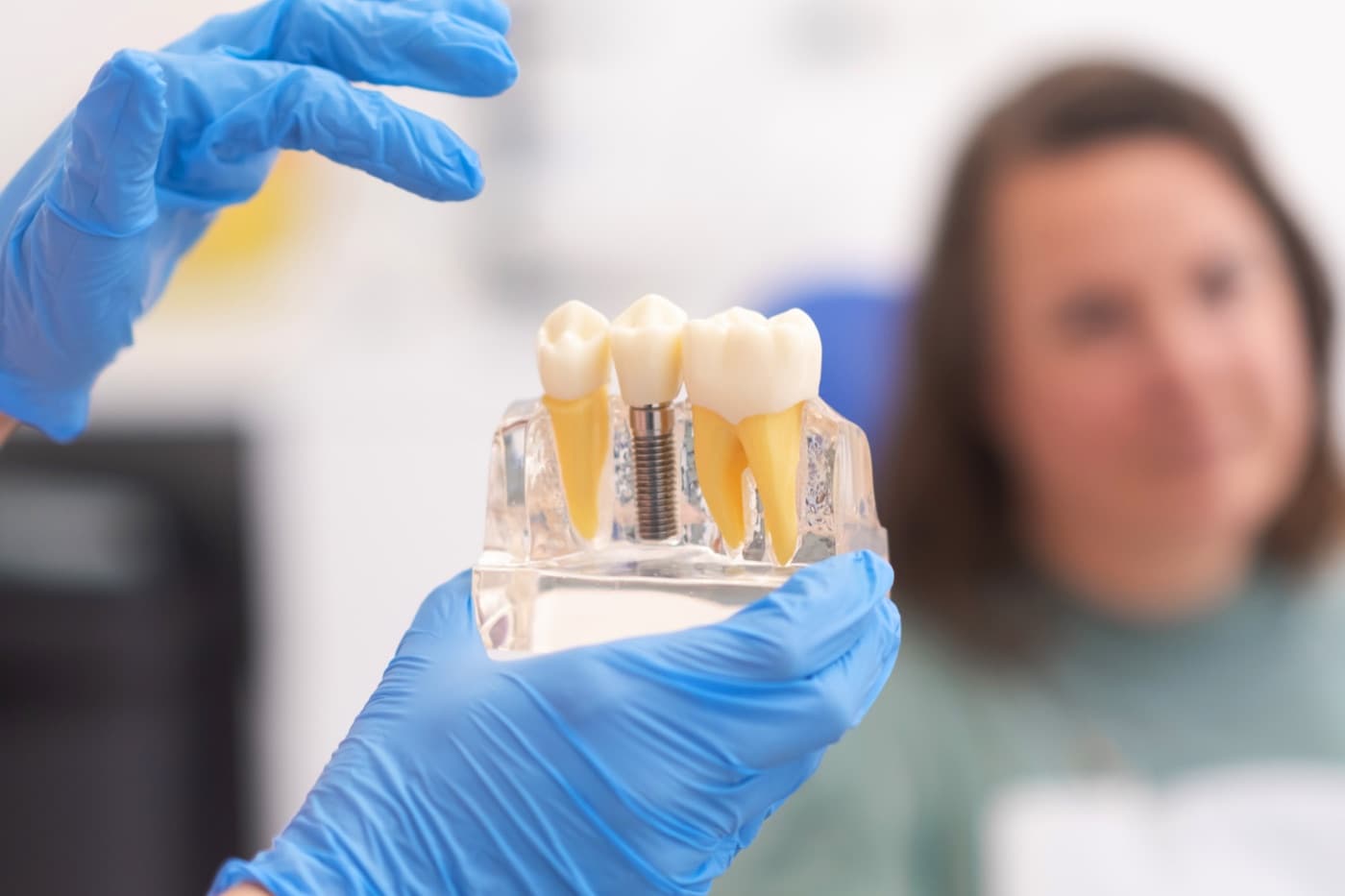
A dental implant is a small post, usually made of titanium, placed into the jawbone where the tooth root used to be. Over time, the bone grows tightly around the post in a process your surgical team may call osseointegration. Once the implant is stable, a connector piece and a custom crown are attached, giving you a replacement tooth that stands on its own.
Unlike a traditional bridge, an implant does not rely on the teeth beside the gap for support. Those neighboring teeth stay untouched, which many patients and dentists consider one of the most meaningful features of this approach.
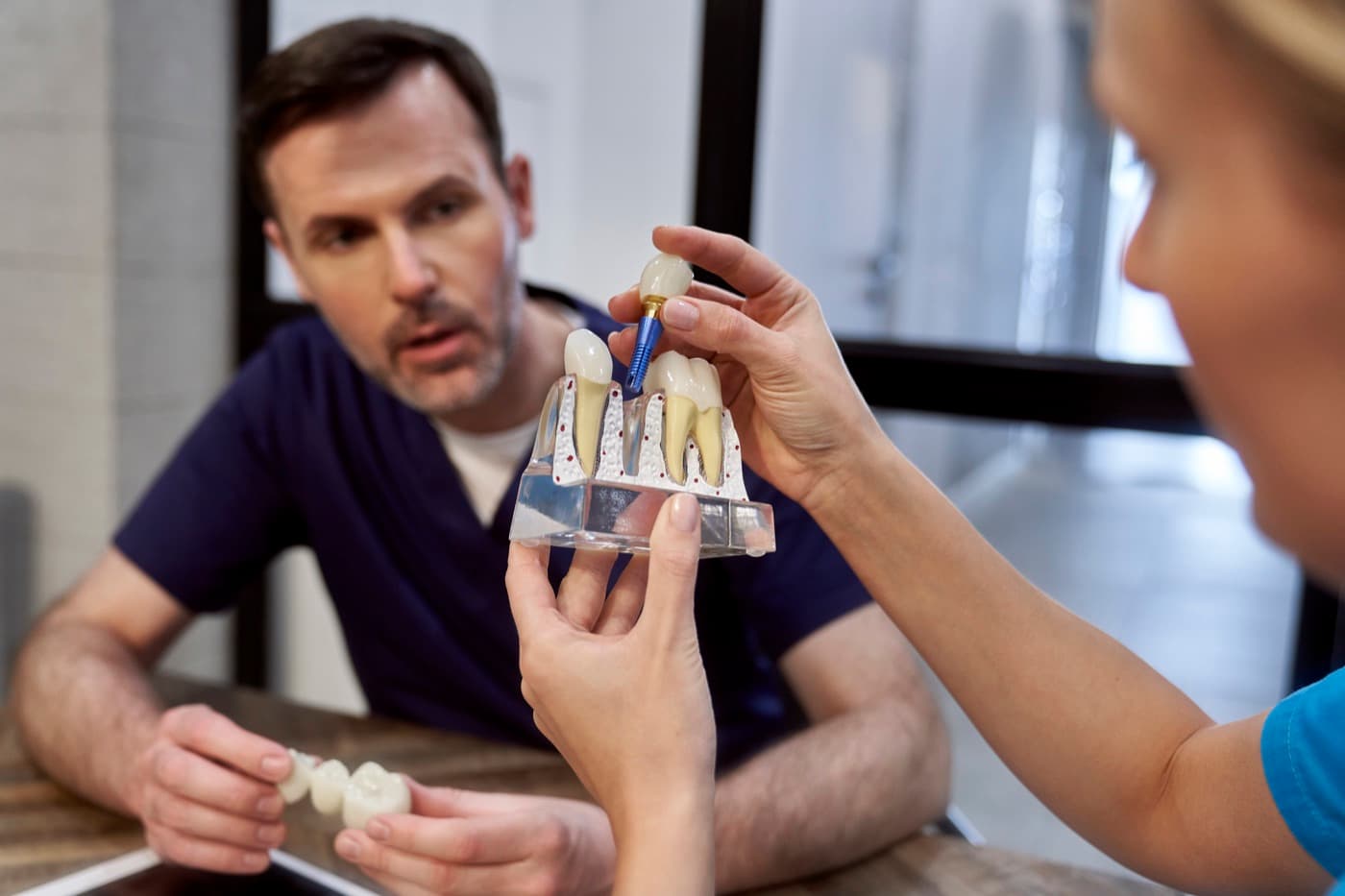
You may hear your team name three parts: the implant itself, the abutment that connects it to the crown, and the crown that does the visible work. Each is chosen and fitted separately, which is part of why the process spans several visits rather than one.
Questions your evaluation will answer
Whether an implant is appropriate for you depends on factors only an examination can reveal: the amount and quality of bone at the site, the health of your gums, how your bite comes together, and your overall medical picture. Your surgeon will determine whether the site is ready for an implant now or would benefit from preparation first.
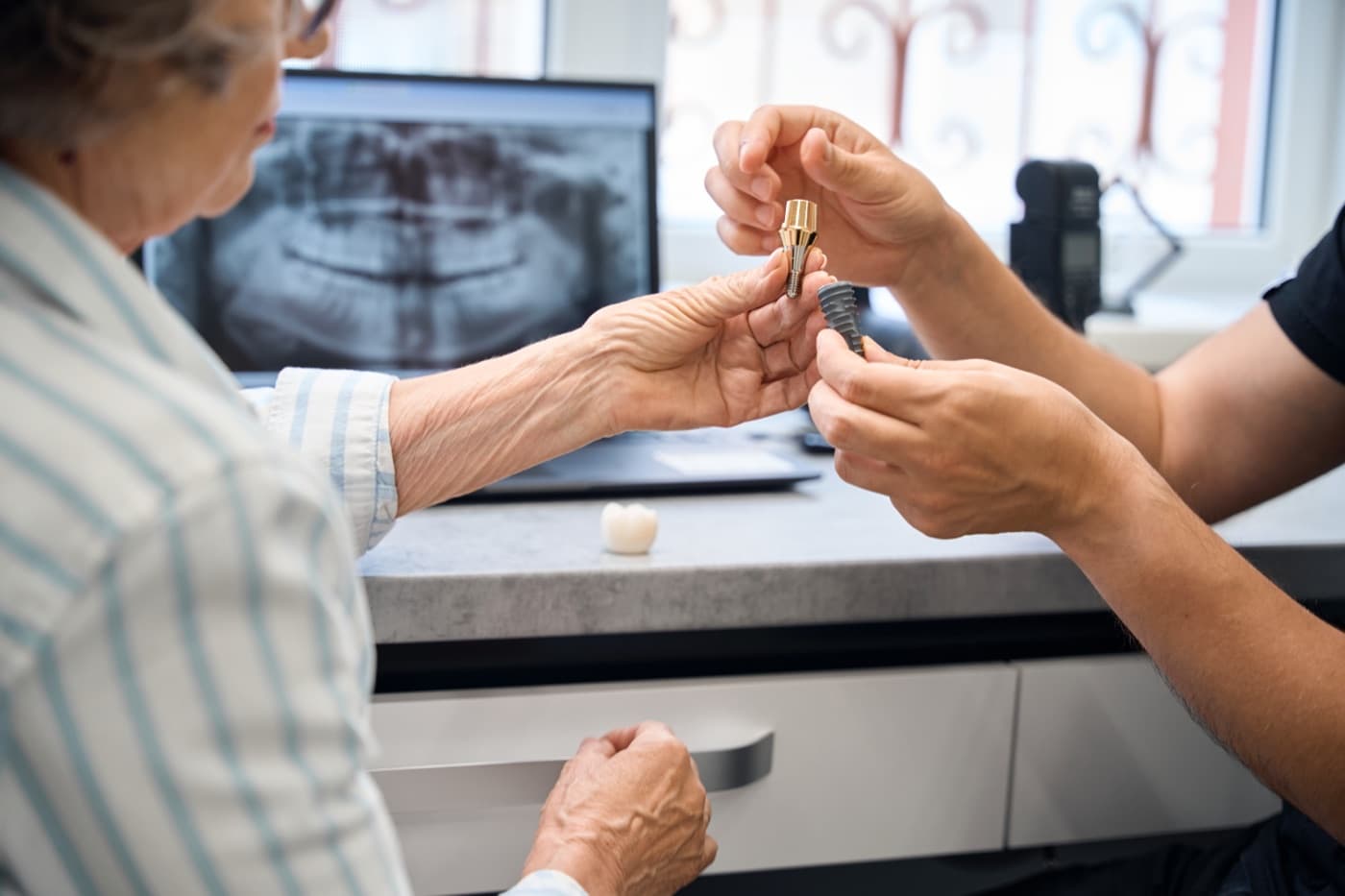
Imaging is a central part of this evaluation. Three-dimensional scans let your surgeon see the width and height of bone, the position of nerves and sinuses, and the relationship of the planned implant to the teeth around it.
If anything in the scan needs attention first — a lingering infection, thin bone, a sinus sitting close to the site — you will hear about it at this stage, along with what addressing it would involve. Surprises belong in the planning room, not the operating room, and this visit is designed to surface them early.
What the process asks of you
Implant treatment unfolds in stages rather than a single visit. Placement, healing, and the fitting of the final crown each happen at their own pace, and your surgeon will give you a personal timeline based on how your body responds.
The process also asks for partnership: keeping the area clean, attending follow-up visits, and being honest about habits and health conditions that could affect healing. Patients who engage with these responsibilities tend to have a smoother experience.
Expect your care to involve both the surgical office and your general dentist, since the crown that finishes the treatment is typically designed and fitted by your restorative dentist. Coordinated visits between the two offices are a normal, planned part of the journey rather than a complication.
How to move forward thoughtfully
Start with a conversation, not a commitment. A consultation lets you hear how an implant would work in your specific mouth, what alternatives exist, and what the full sequence of care would look like. Bring your questions and any dental records you have.
This article is educational and cannot replace an individual evaluation. The right choice for your missing tooth is the one made with a surgeon who has examined you, reviewed your imaging, and heard your goals.
Common questions
Do I have to replace a missing tooth at all?
Will an implant affect the teeth next to the gap?
How long does the whole process take?
This article is general education, not personal medical advice. It cannot account for your health history or imaging, and it never replaces the evaluation and written instructions you receive from your surgeon.

Ready to talk through your plan?
Request a consultation and our team will follow up to schedule your visit.