
What Actually Happens at a Dental Implant Consultation
5 minute read
DRAFT — pending clinical review v1.0-draft Clinical reviewer (to be assigned)
An implant consultation is an evaluation and a conversation, not a sales pitch. Here is what to expect, what to bring, and what to ask.
The purpose of the visit
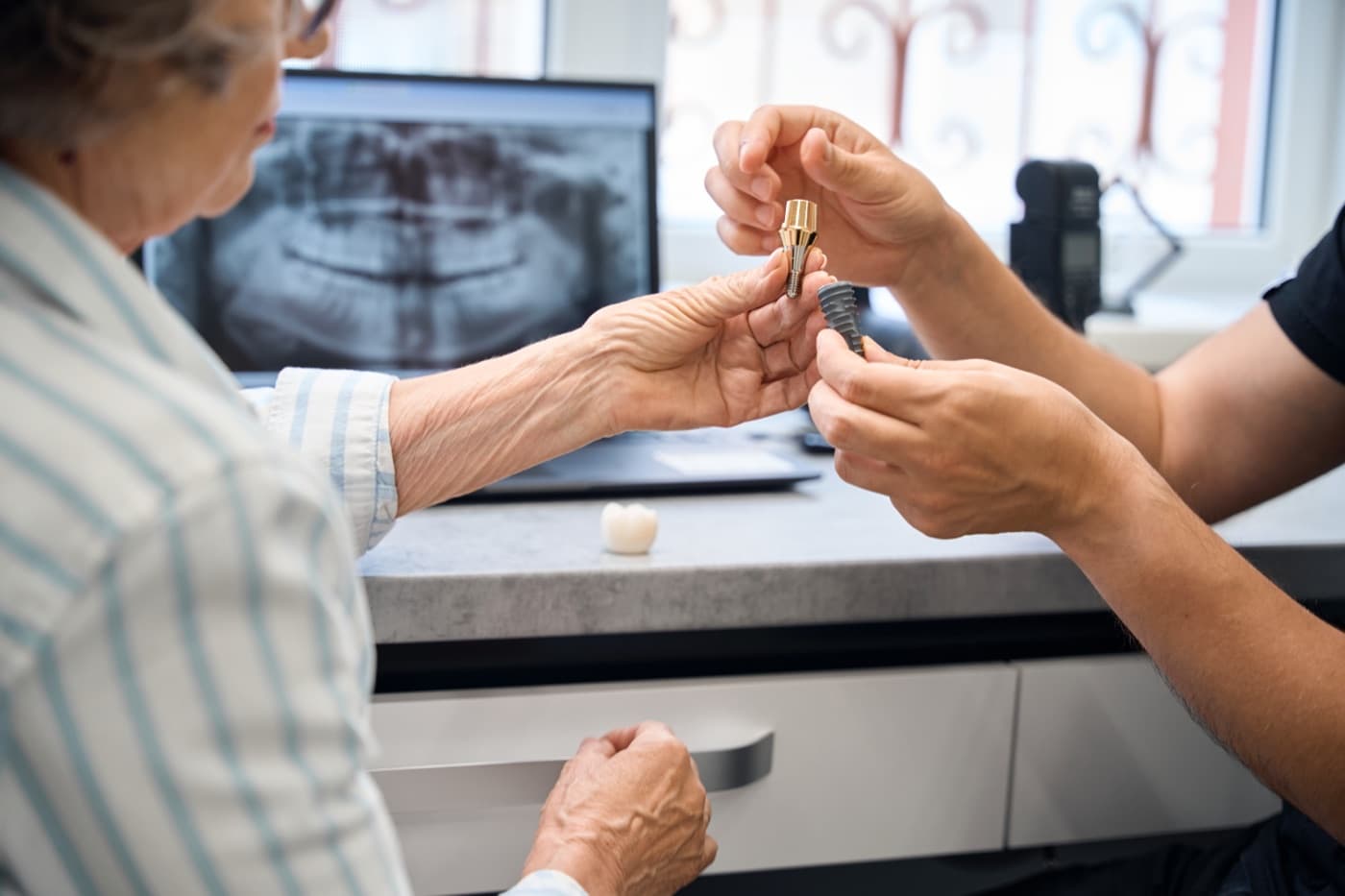
An implant consultation exists to answer one question: what would replacing your missing tooth or teeth actually involve, in your mouth, given your health? It is a fact-finding visit for both you and the surgeon. You leave with information; the surgeon leaves with the details needed to build a plan.
No treatment happens at this appointment. You should feel free to ask anything, take notes, and go home to think. A good consultation gives you enough understanding to make an unhurried decision.
It helps to arrive knowing what you want from the visit. Some patients come to confirm a plan their dentist already outlined; others are starting from scratch after losing a tooth. Either way, say so at the start — the surgeon can shape the conversation around where you actually are.
The health history conversation
Expect a thorough review of your medical history: conditions you manage, medications and supplements you take, past surgeries, and habits such as smoking. These details are not gathered to judge you — they shape how safely and predictably implant treatment can proceed.
Be complete and candid. Something that seems unrelated to your teeth, such as a medication for bone health or a change in a chronic condition, can genuinely matter to surgical planning. Your surgeon will determine how each factor fits into your plan.
If you see multiple physicians or take medications prescribed by more than one of them, a written list saves time and prevents omissions. Photographs of medication bottles work well too. The goal is a complete picture, assembled once, so nothing surprises anyone later.
The examination and imaging
The clinical exam looks at the site of the missing tooth, the health of your gums, the condition of your remaining teeth, and how your jaws come together. The surgeon is assessing both the space where an implant would go and the environment it would live in.
Three-dimensional imaging is often part of this visit or scheduled alongside it. A cone-beam scan shows bone volume, nerve pathways, and sinus position — information a flat X-ray cannot fully provide. This is what turns a general idea into a specific, measurable plan.
Photographs, impressions, or digital scans of your teeth may be gathered as well, depending on what your plan requires. Together these records give both the surgeon and your restorative dentist the same complete picture to work from, so the plan you hear about later reflects your actual anatomy rather than a general template.
The discussion of options
After the exam, your surgeon will walk through what they found and what it means. Sometimes the site is ready for an implant. Sometimes preparation, such as bone grafting, comes first. Sometimes another form of tooth replacement deserves discussion. You should hear the reasoning, not just the recommendation.
This is also where sequencing gets explained: which steps happen in the surgical office, which happen with your restorative dentist, and how the two offices coordinate.
Practical questions belong in this conversation as well. Your consultation is exactly the place to ask what your plan would involve financially, how visits would be spaced, and what to expect at each stage. The office team can walk you through all of it.
Questions worth asking before you leave
Consider asking: What did my imaging show about my bone? What are the stages of my treatment and what happens at each one? What could change the plan along the way? What are my alternatives, and what happens if I wait?
There is no obligation to decide in the room. A consultation is education applied to your specific anatomy — the decision that follows should be yours, made at your own pace, with every question answered to your satisfaction first.
Common questions
Should I bring anything to an implant consultation?
Will I get a treatment plan at the first visit?
Does a consultation commit me to treatment?
This article is general education, not personal medical advice. It cannot account for your health history or imaging, and it never replaces the evaluation and written instructions you receive from your surgeon.

Ready to talk through your plan?
Request a consultation and our team will follow up to schedule your visit.