
Full-Arch Implant Treatment: What Replacing Every Tooth Really Involves
6 minute read
DRAFT — pending clinical review v1.0-draft Clinical reviewer (to be assigned)
When most or all teeth in a jaw are failing, full-arch implant treatment offers a fixed replacement. Here is how the approach actually works.
Who full-arch treatment is for
Full-arch treatment addresses a situation many patients find hard to talk about: an entire upper or lower jaw where the teeth are failing or already gone. Years of decay, gum disease, wear, or previous dental work reaching the end of its usefulness can all lead here.
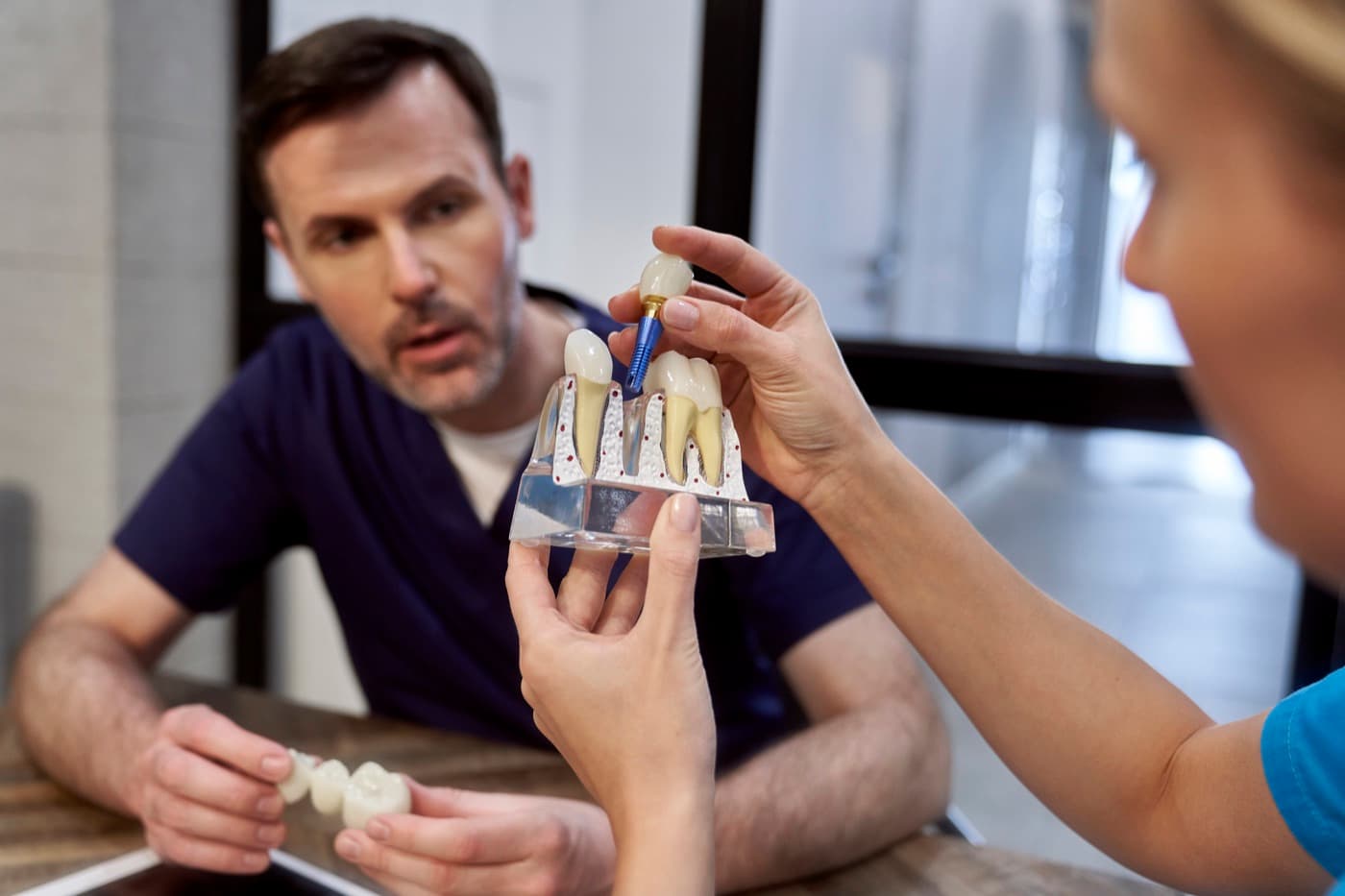
Rather than replacing teeth one at a time, full-arch treatment uses a small number of implants placed in strategic positions to support a complete row of fixed replacement teeth. The result stays in your mouth — it is not removed at night like a traditional denture.
For many patients the decision is as much emotional as clinical. Struggling teeth can mean years of patching, discomfort, and self-consciousness. Part of the consultation is simply naming that honestly and asking whether continuing to repair is still serving you better than replacing.
How a few implants support a whole arch
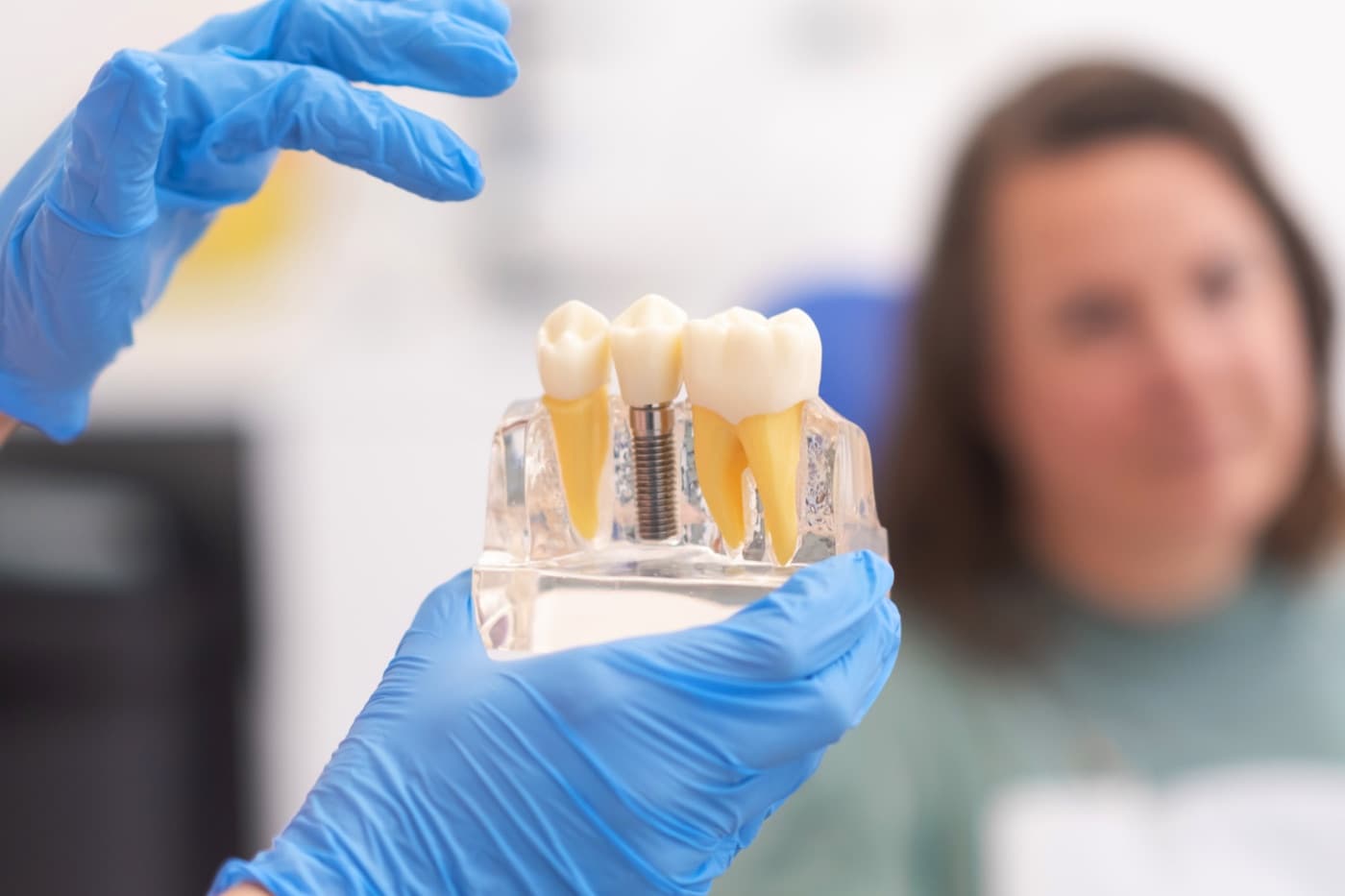
It surprises many patients that an entire arch of teeth does not require an implant for every tooth. Implants are positioned where the bone is strongest and angled to make the most of the anatomy, then joined together by the prosthesis they support. Working as a group, they distribute chewing forces across the arch.
The exact number and position of implants is an engineering decision based on your bone, your bite, and the design of your final teeth. Your surgeon will determine that configuration from your three-dimensional imaging.
This strategic approach can also reduce the need for extensive grafting in some patients, since implants can often be angled to use the bone that exists rather than rebuilding bone that does not. Whether that applies to you is a planning question your imaging will answer.
What the treatment sequence looks like
Planning comes first and is extensive: imaging, records, and close coordination between the surgeon and the restorative dentist who will design your teeth. On the surgical day, any remaining failing teeth are removed, the bone is shaped as needed, and the implants are placed.
In many cases a provisional set of fixed teeth is attached soon after placement, so you are not without teeth while the implants integrate with the bone. Whether that is possible in your case depends on the stability achieved at surgery — a judgment your surgeon makes in the moment, guided by the plan.
Anesthesia planning is a significant part of the surgical day, since the visit involves more than a single site. You and your surgeon will discuss comfort options well in advance so the approach fits both the procedure and your preferences.
The provisional phase and the final teeth
The first set of teeth is deliberately provisional. It protects the implants while bone integrates, lets you evaluate how the new teeth look and feel, and gives your team a chance to refine the design. Adjustments during this phase are normal and expected.
Once integration is confirmed, your restorative dentist fabricates the final prosthesis using stronger materials and everything learned from the provisional phase. The final teeth reflect refinements in fit, appearance, and bite that only living with a trial version can reveal.
Expect several appointments during this stretch — some surgical follow-ups, some restorative design visits. Each one has a purpose, and together they are what separates a prosthesis that merely fits from one that feels like yours.
Living with a full-arch restoration
Fixed full-arch teeth are cared for differently than natural teeth or dentures. Cleaning under and around the prosthesis becomes a daily habit, and periodic professional visits let your team examine the implants and the tissue around them.
Full-arch treatment is a significant undertaking, and it is not the right answer for everyone. A consultation — with imaging, an honest health review, and a discussion of alternatives — is the only way to know whether it fits your situation.
Common questions
Will I be without teeth during full-arch treatment?
Is a full-arch restoration removable?
Do failing teeth have to come out all at once?
This article is general education, not personal medical advice. It cannot account for your health history or imaging, and it never replaces the evaluation and written instructions you receive from your surgeon.

Ready to talk through your plan?
Request a consultation and our team will follow up to schedule your visit.