

Your Dentist and Your Oral Surgeon: Who Does What in Implant Treatment
4 minute read
DRAFT — pending clinical review v1.0-draft Clinical reviewer (to be assigned)
Implant care is a team effort between your restorative dentist and your oral surgeon. Understanding each role makes the process easier to follow.
Why implant treatment involves two offices
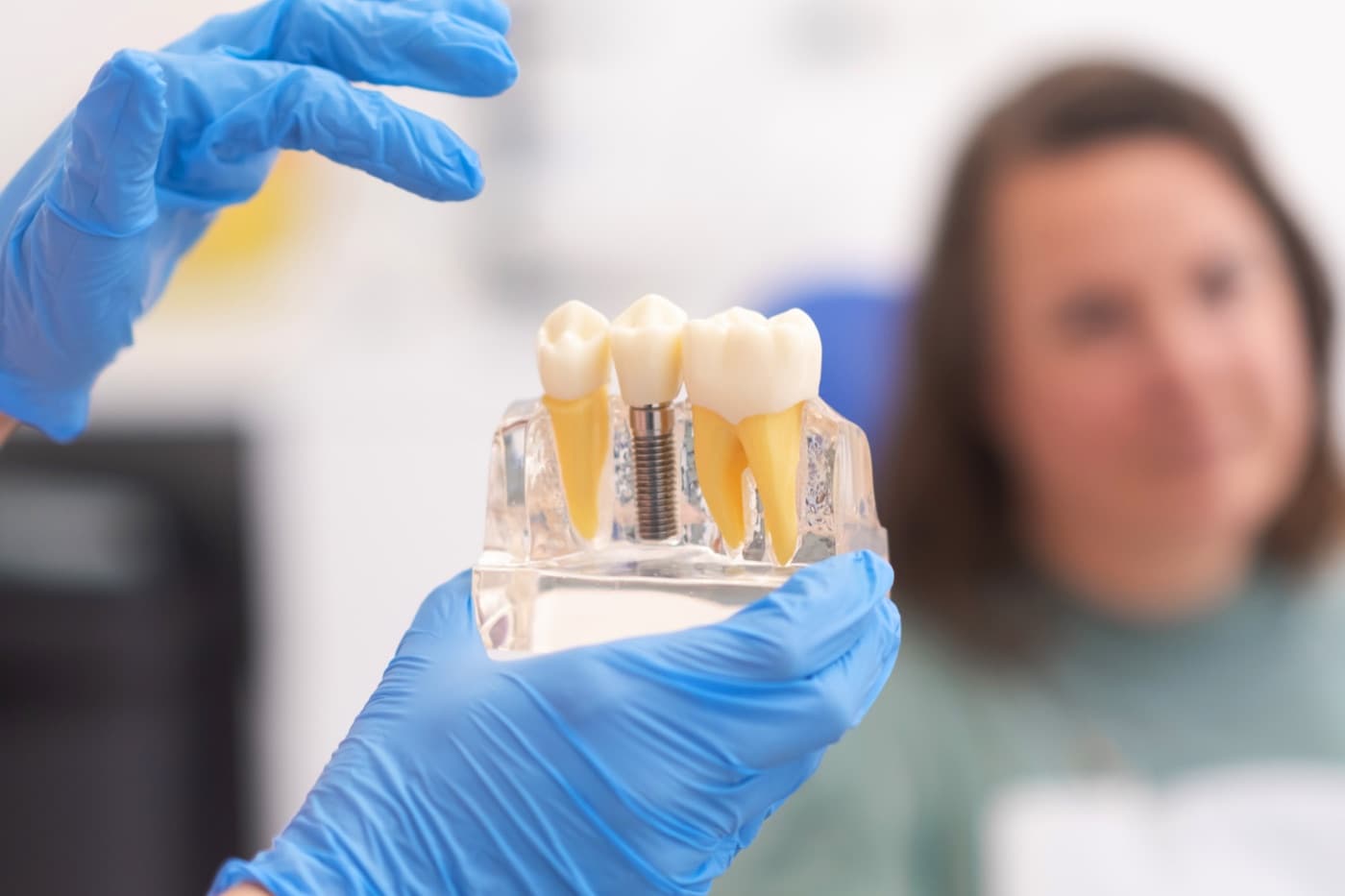
A dental implant has two distinct parts: the post that lives in the bone and the tooth that shows in your smile. Each part calls for different expertise. The surgical placement of the post is typically handled by an oral surgeon, while the design and fitting of the visible tooth is the work of your restorative dentist.
This division is not a complication — it is how each phase of your care gets the focused attention it deserves. The two offices communicate throughout so that the surgical plan serves the final tooth, not the other way around.
Patients sometimes worry that seeing two offices means fragmented care. In practice, the opposite tends to be true: each clinician concentrates on the part of treatment they perform every day, and the shared plan keeps both aligned. You benefit from two sets of trained eyes on the same case.
What the oral surgeon handles
The surgeon evaluates the implant site, reviews your health history, obtains and interprets three-dimensional imaging, and performs the surgical steps: extractions if needed, bone grafting if the site requires preparation, and the placement of the implant itself. The surgeon also monitors healing until the implant is solidly integrated with the bone.
Because oral surgeons manage anesthesia and surgical care routinely, this phase includes planning for your comfort during the procedure and clear instructions for the days after it.
The surgeon's involvement does not end when the implant goes in. Follow-up visits confirm that the site is healing and the implant is integrating with the bone, and the surgeon formally clears the implant for restoration before your dentist builds on it.
What the restorative dentist handles
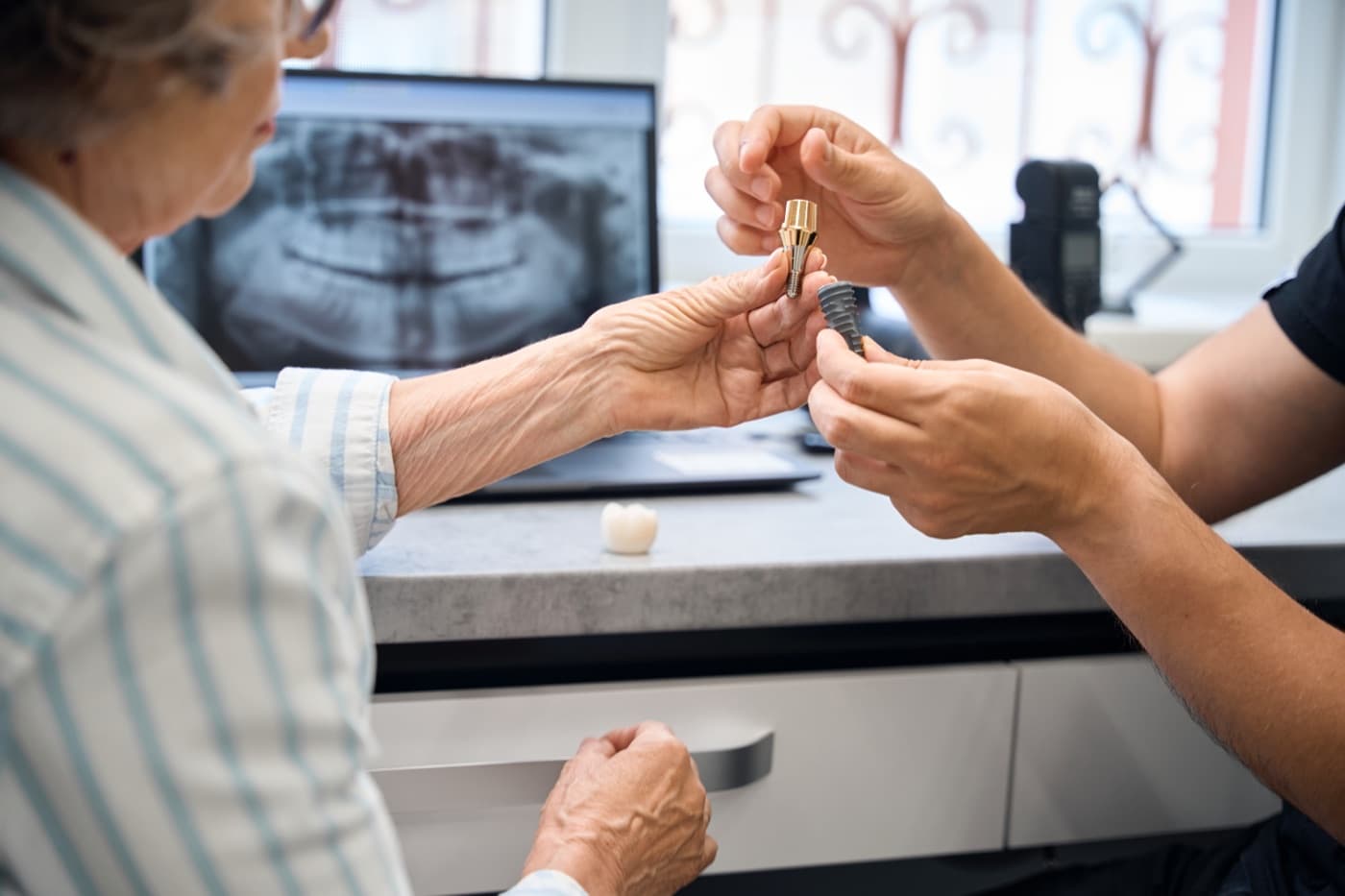
Your restorative dentist designs the tooth or teeth the implant will support. That work includes impressions or digital scans, choosing materials, matching the shade to your natural teeth, and adjusting the bite so the new tooth works in harmony with the rest of your mouth.
The restorative dentist is also usually the one who cares for the finished tooth over the long term — checking it at routine visits, monitoring the gum around it, and addressing normal wear.
This continuity matters. Your dentist already knows your bite, your habits, and the history of your other teeth, so the implant crown is designed as part of your whole mouth rather than as an isolated project.
How the two roles connect
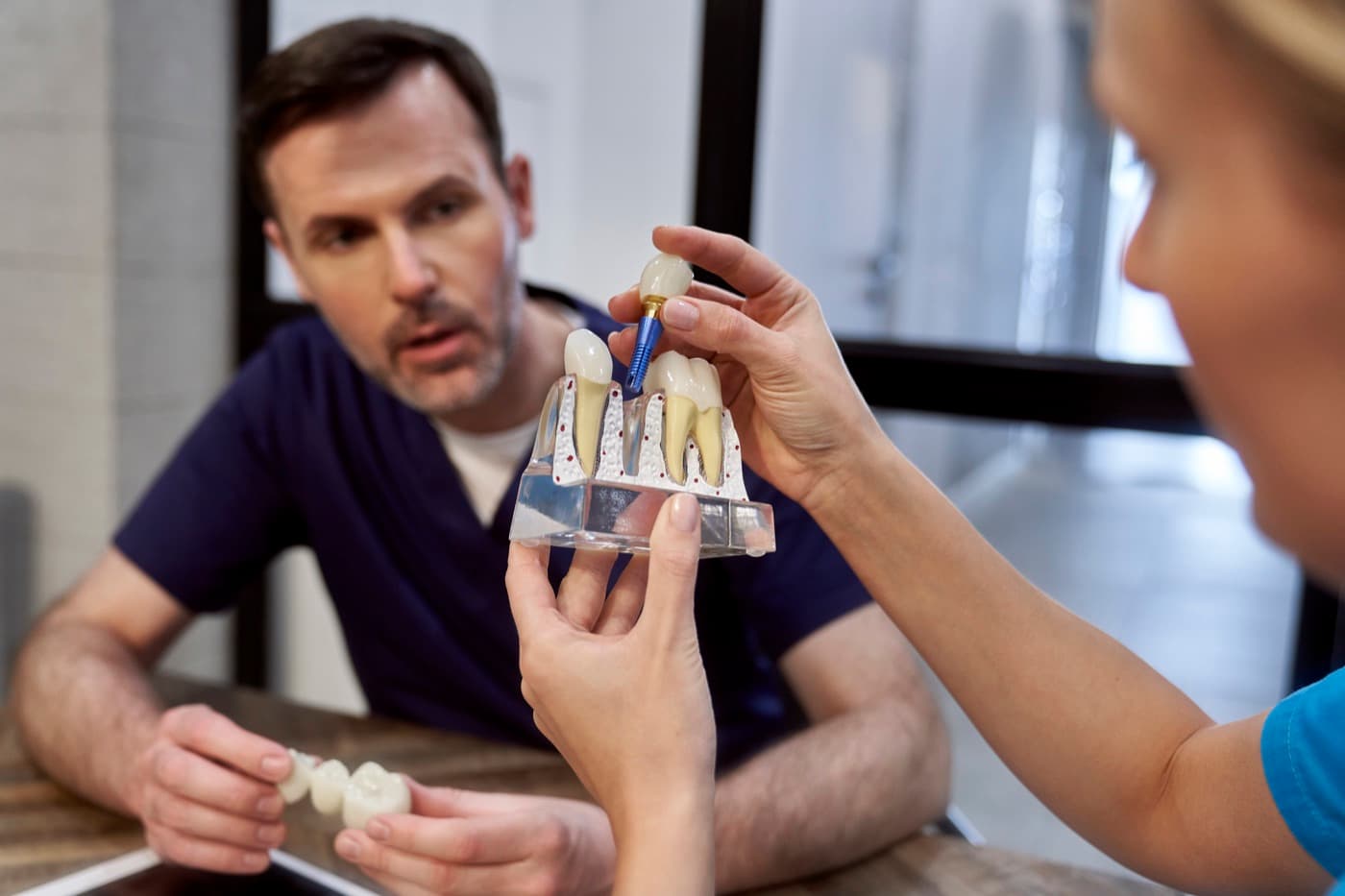
Good implant treatment is planned backward from the final tooth. The dentist communicates where the tooth needs to be for appearance and function; the surgeon places the implant to support that position. Records, imaging, and planning notes move between the offices so that nothing is left to guesswork.
As a patient, you may notice this coordination as scheduling that alternates between offices. If you are ever unsure which office to call about a question, ask either one — part of their job is directing you to the right place.
It is reasonable to ask, at the start of treatment, how the offices share information and who leads each phase. A clear answer to that question is itself a good sign — it means the team has a process, and you are stepping into it rather than managing it yourself.
What this means for your appointments
Expect your schedule to alternate: evaluation and surgery at the surgical office, then design and fitting visits with your dentist once the surgeon confirms the implant is ready. Keeping both offices updated on your contact information and any health changes keeps the handoffs smooth.
If you ever feel unsure where you are in the sequence, ask for a plain-language recap of what has been done and what comes next. A well-run implant team can answer that question easily — and you deserve to hold the map of your own care.
Common questions
Do I need a referral to see an oral surgeon about implants?
Who do I see if something feels wrong after treatment?
Who makes the final tooth that goes on the implant?
This article is general education, not personal medical advice. It cannot account for your health history or imaging, and it never replaces the evaluation and written instructions you receive from your surgeon.
Ready to talk through your plan?
Request a consultation and our team will follow up to schedule your visit.