

Implant, Bridge, or Denture? Questions Worth Asking Before You Choose
6 minute read
DRAFT — pending clinical review v1.0-draft Clinical reviewer (to be assigned)
Tooth replacement has several good answers, and the right one depends on you. These questions help you compare implants, bridges, and dentures.
Three approaches, one decision
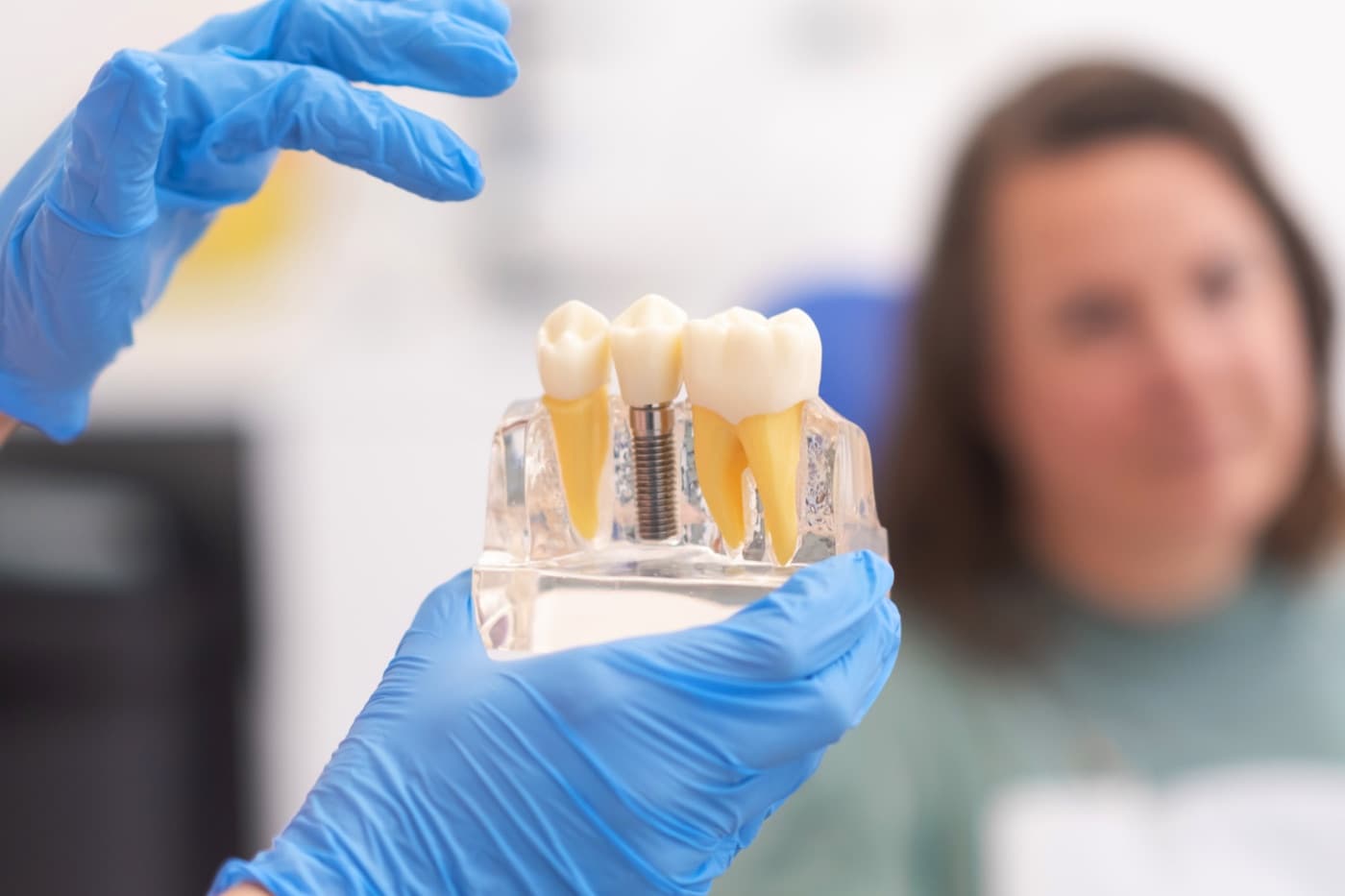
When teeth are missing, the main paths are a dental implant, a fixed bridge anchored to neighboring teeth, or a removable denture — partial or complete. Each approach has helped enormous numbers of patients, and each has trade-offs. There is no universally correct answer, only the answer that fits your mouth, health, priorities, and circumstances.
Rather than hand you a verdict, this article offers the questions that make a consultation productive. Bring them with you; the answers will be specific to you in a way no article can be.
It also helps to know these options are not always either-or. Implants can support bridges and can anchor removable dentures, so the categories blend in practice. Keeping an open mind lets your team propose combinations a simple three-way comparison would miss.
Questions about your neighboring teeth
Ask: what would each option require of the teeth next to the gap? A traditional bridge uses the adjacent teeth as anchors, which typically means reshaping them to carry crowns. An implant stands independently. A removable partial rests on and clasps around remaining teeth.
Also ask what condition those neighboring teeth are in. If they already need crowns, a bridge may make different sense than if they are untouched and healthy. Your dentist's assessment of these teeth is central to the comparison.
This question matters because it is about more than the gap — it is about what the rest of your mouth is asked to give up or take on. An option that solves one problem while creating work for healthy teeth deserves that trade-off stated plainly.
Questions about bone and long-term change
Ask what is likely to happen to the bone under the gap with each option. Bone that no longer supports a tooth root remodels over time, and the options differ in how they interact with that process. An implant transmits chewing force into the bone; a bridge or denture rests above it.
Ask, too, how each option is maintained and repaired over the years, and what happens if it eventually needs replacement. Every restoration has a service life and a maintenance story — it is fair to ask for each one honestly.
When you ask about longevity and maintenance, listen for qualitative honesty rather than promises. Every option requires upkeep over the years, and any answer that sounds like a guarantee deserves a polite follow-up question.
Questions about daily life
Ask what each option feels like to live with: how it is cleaned, whether it comes out at night, how it affects speech and eating, and how secure it feels. Patients weigh these factors very differently — a routine one person finds trivial, another finds burdensome.
Ask about the treatment path itself: how many visits, what procedures are involved, and what is asked of you during healing. An honest picture of the journey matters as much as the destination.
Questions about your health and candidacy
Finally, ask which options your health and anatomy actually support. Bone volume, gum health, medical conditions, medications, and habits such as smoking all influence what your team can recommend with confidence. Your surgeon will determine your candidacy for the surgical options after an examination and imaging.
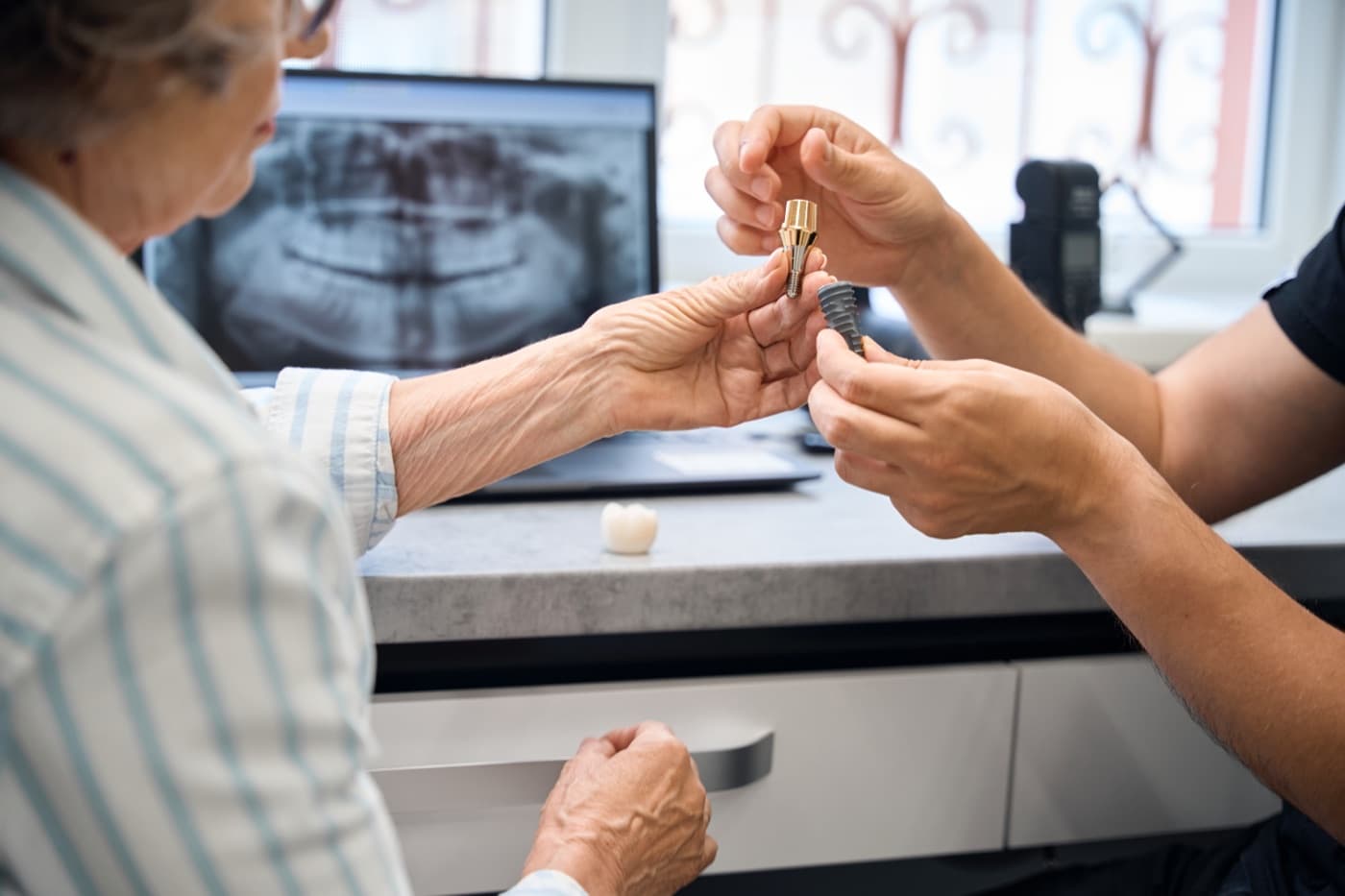
A good clinician will welcome every one of these questions. The goal of a consultation is not to steer you — it is to give you the specific facts of your own case so the decision is genuinely yours.
Finally, ask yourself what matters most to you — chewing confidence, appearance, simplicity, avoiding surgery, preserving other teeth. Ranking your own priorities before the visit makes every answer you receive easier to weigh. Write the list down and bring it with you — priorities stated out loud have a way of making the right choice feel clearer.
Common questions
Is one option simply better than the others?
Can I switch approaches later?
Who should I discuss these questions with?
This article is general education, not personal medical advice. It cannot account for your health history or imaging, and it never replaces the evaluation and written instructions you receive from your surgeon.

Ready to talk through your plan?
Request a consultation and our team will follow up to schedule your visit.