
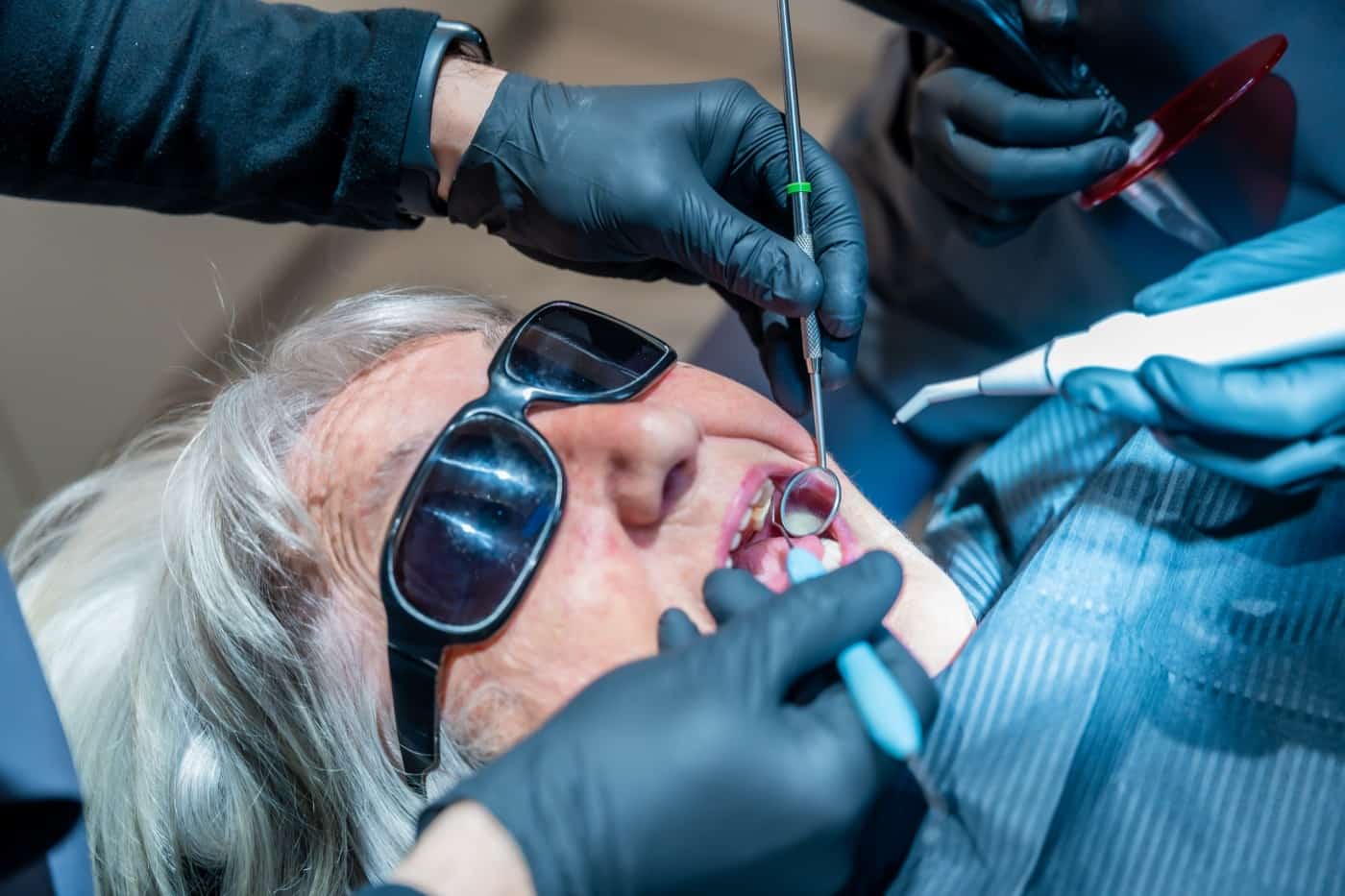
Healing and your final restoration
The quiet middle phase of implant treatment matters as much as the surgery. Here is what your body is doing, what you should do, and how the handoff to your final teeth works.
The healing phase
What healing involves
Healing time varies by patient and procedure — your surgeon will give you a personal timeline. What follows is the shape of the process, not a schedule.
Early healing
The first days after placement focus on protecting the surgical site — following your written aftercare instructions on eating, cleaning, and activity. Some swelling and soreness are expected; your instructions explain what is normal and when to call us.
Integration
Over the following period, the implant integrates with your bone — the biological bond that lets it carry chewing forces. This phase mostly feels uneventful, which is the point. How long it takes varies by patient, site, and whether grafting was involved; your surgeon tracks it at follow-up visits.
Confirmation
Before any final restoration is made, your surgeon confirms the implant is stable and the surrounding tissue is healthy. This checkpoint protects your investment — final teeth are only built on a confirmed foundation.
Depending on your plan, a temporary tooth or appliance keeps you functioning during this period. If anything feels wrong between visits — increasing pain, looseness, or changes in the gum — call us rather than waiting for the next appointment.
The handoff
From our office to your restorative dentist
Once healing is confirmed, care transitions to your restorative dentist, who designs and attaches the final crown, bridge, or arch. This handoff is planned from the beginning — we share records, imaging, and implant specifications directly with their office, so nothing depends on you carrying information between doctors.
The restorative phase typically involves impressions or digital scans, laboratory fabrication, and fitting visits to refine bite and appearance. Your restorative dentist leads this stage; we remain available to both of you if surgical questions come up.
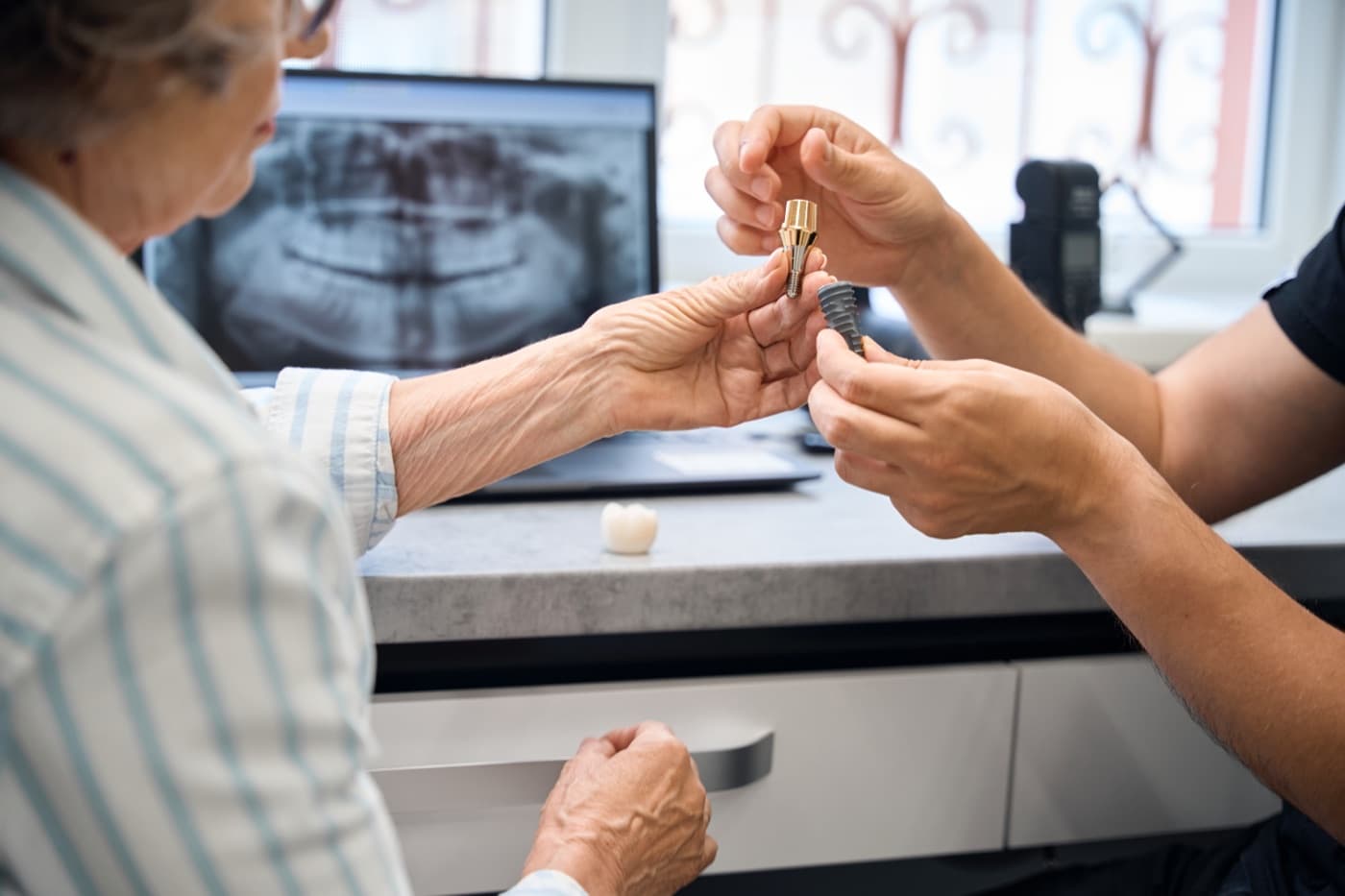
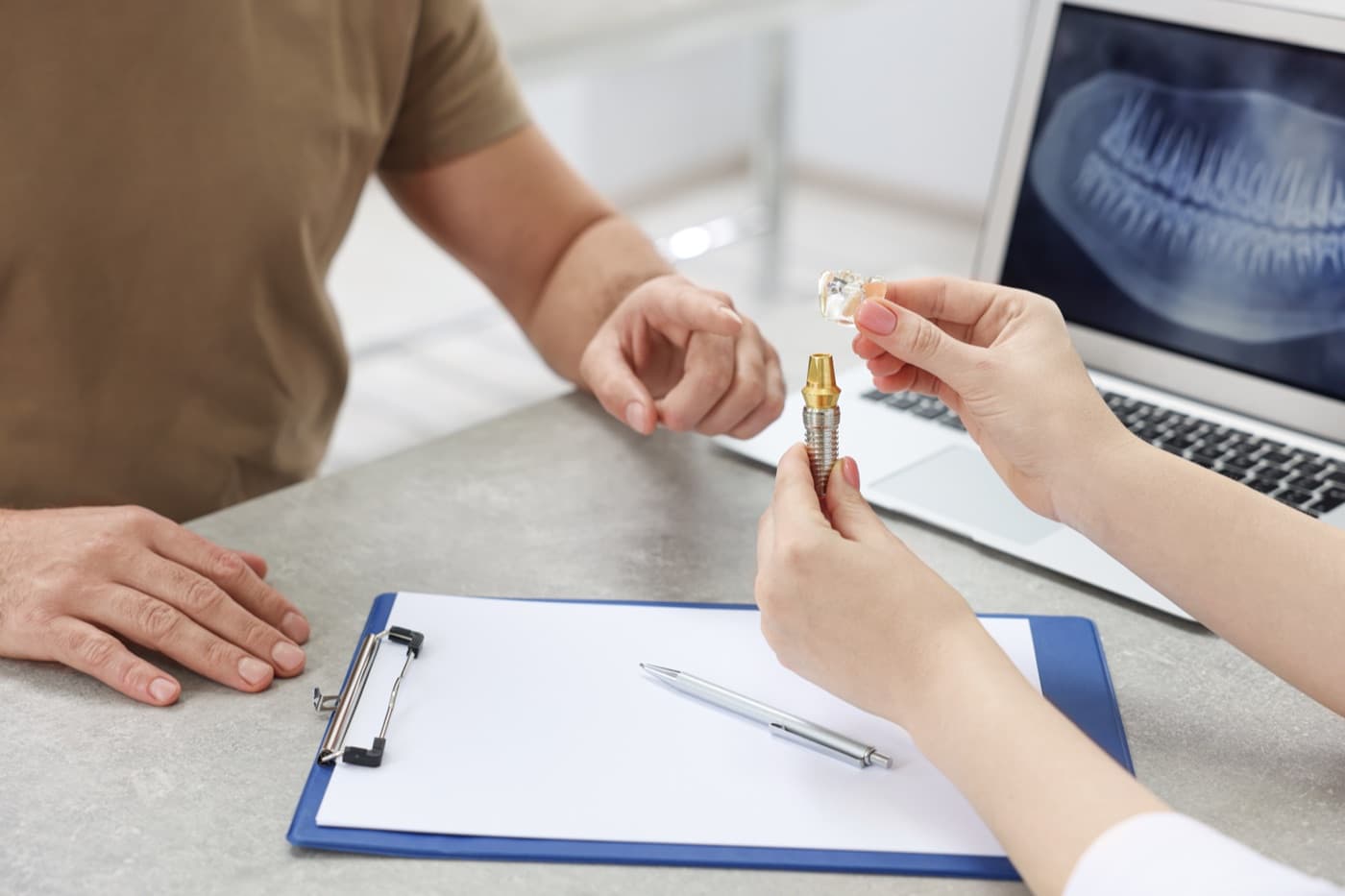

The quiet phase that protects your result.
The quiet middle phase of implant treatment matters as much as the surgery. While it mostly feels uneventful, the implant is integrating with your bone — the biological bond that lets it carry chewing forces.
Final teeth are only built on a confirmed foundation. The handoff to your restorative dentist is planned from the beginning, so nothing depends on you carrying information between doctors.
Long-term care
Maintaining your result
Implants do not get cavities, but the tissue around them still needs care. Maintenance is what protects the outcome.
- Daily brushing and cleaning between teeth, using techniques your team demonstrates for your specific restoration
- Regular dental checkups and professional cleanings with your restorative dentist
- Telling your dentist promptly about bleeding gums, looseness, or discomfort around an implant
- Discussing a night guard if you grind or clench your teeth
Questions about what your recovery will look like day to day? See post-operative instructions →
Ready to talk through your plan?
Request a consultation and our team will follow up to schedule your visit.