
What Happens During Dental Implant Placement, Step by Step
5 minute read
DRAFT — pending clinical review v1.0-draft Clinical reviewer (to be assigned)
Knowing the steps of implant surgery makes the day far less mysterious. Here is what happens from arrival to heading home.
Before anything begins
By the time you arrive for implant placement, the important decisions have already been made. Your imaging has been studied, the implant position planned, and your comfort options discussed and chosen in advance. The surgical visit is the execution of a plan, not the invention of one.
You will have received instructions to follow beforehand — about eating, medications, and arranging a ride if your anesthesia plan calls for one. Following them closely is part of a smooth day.
If anxiety is part of your picture, say so before the day arrives. Comfort planning works best when it is honest, and there is nothing unusual about wanting more support — surgical teams navigate this with patients constantly.
Getting you comfortable
The first step in the room is comfort. Depending on what you and your surgeon chose, that may mean local anesthetic alone, local anesthetic with a form of sedation, or a deeper level of anesthesia. Whatever the plan, the area is fully numbed before surgery begins, and your team monitors you throughout.
Many patients are surprised afterward by how uneventful the experience felt. Pressure and vibration are commonly noticed with lighter comfort options; sharp pain is not part of the plan.
Time often feels compressed under sedation, and many patients describe the visit as far shorter than it was. Whatever you feel or do not feel, your team is watching your comfort continuously and can adjust as the procedure goes on.
Placing the implant
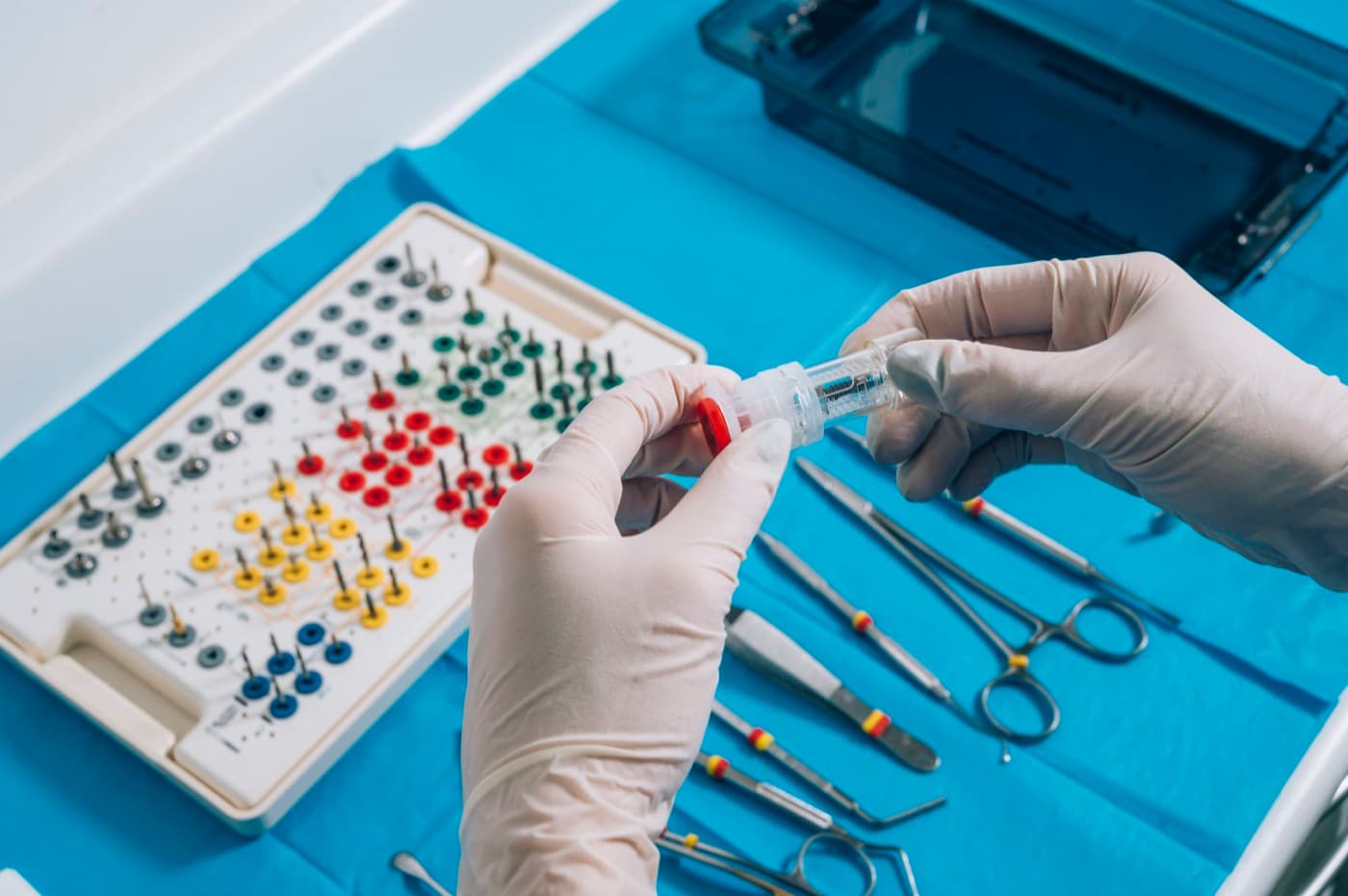
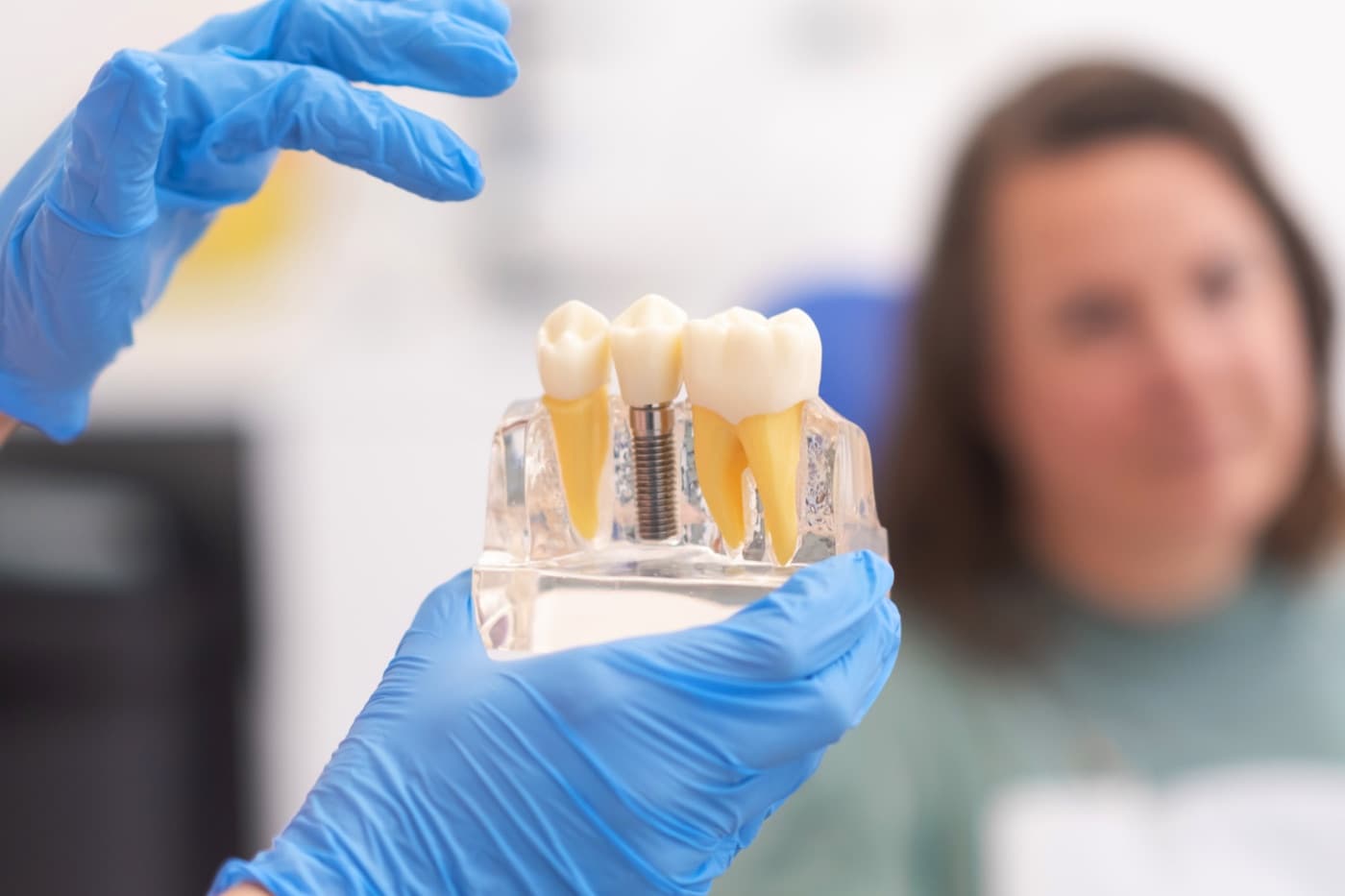
The surgeon gently opens the gum at the planned site to reach the bone, then prepares a precise channel using a sequence of instruments sized to match the implant. If a surgical guide was fabricated from your scan, it directs the position and angle. The implant is then threaded into the prepared channel until it sits securely in the bone.
Depending on your plan, the surgeon may place a small cap on the implant and close the gum over or around it, or attach a healing connector that shapes the gum while the bone integrates. In select cases a provisional tooth is attached the same day — a judgment your surgeon makes based on the stability achieved.
Throughout these steps the surgeon is checking fit and stability continuously. The sequence is methodical on purpose: each instrument, each measurement, and each decision follows the plan built from your imaging.
Checks before you go
Before finishing, the surgeon confirms the implant's position and stability and that the site is properly closed. If sedation was used, you rest in recovery until your team is satisfied you are ready to leave with your escort.
You will go home with written aftercare instructions and any prescriptions your surgeon considers appropriate. The instructions you receive are tailored to your procedure — they take precedence over anything general you read online, including this article. Keep them somewhere visible for the first days, along with your surgical office's contact information for questions.
The first days at home
Expect some swelling and tenderness at the site; both are a normal part of early healing. Your instructions will cover gentle cleaning, what to eat, what to avoid, and how to protect the site while it settles.
Contact your surgical office if anything concerns you — that is what follow-up care is for. From here, the quiet work of integration begins, and your next visits will confirm it is proceeding as planned.
One practical note: plan a quiet remainder of the day. Even patients who feel energetic do better when they let the site rest, and your escort, your couch, and your written instructions are the only agenda items that matter once you are home. Arranging a light schedule in advance makes rest easy rather than negotiated.
Common questions
Will I be asleep for implant placement?
Does implant placement hurt?
Will I leave with a tooth on the implant?
This article is general education, not personal medical advice. It cannot account for your health history or imaging, and it never replaces the evaluation and written instructions you receive from your surgeon.

Ready to talk through your plan?
Request a consultation and our team will follow up to schedule your visit.