
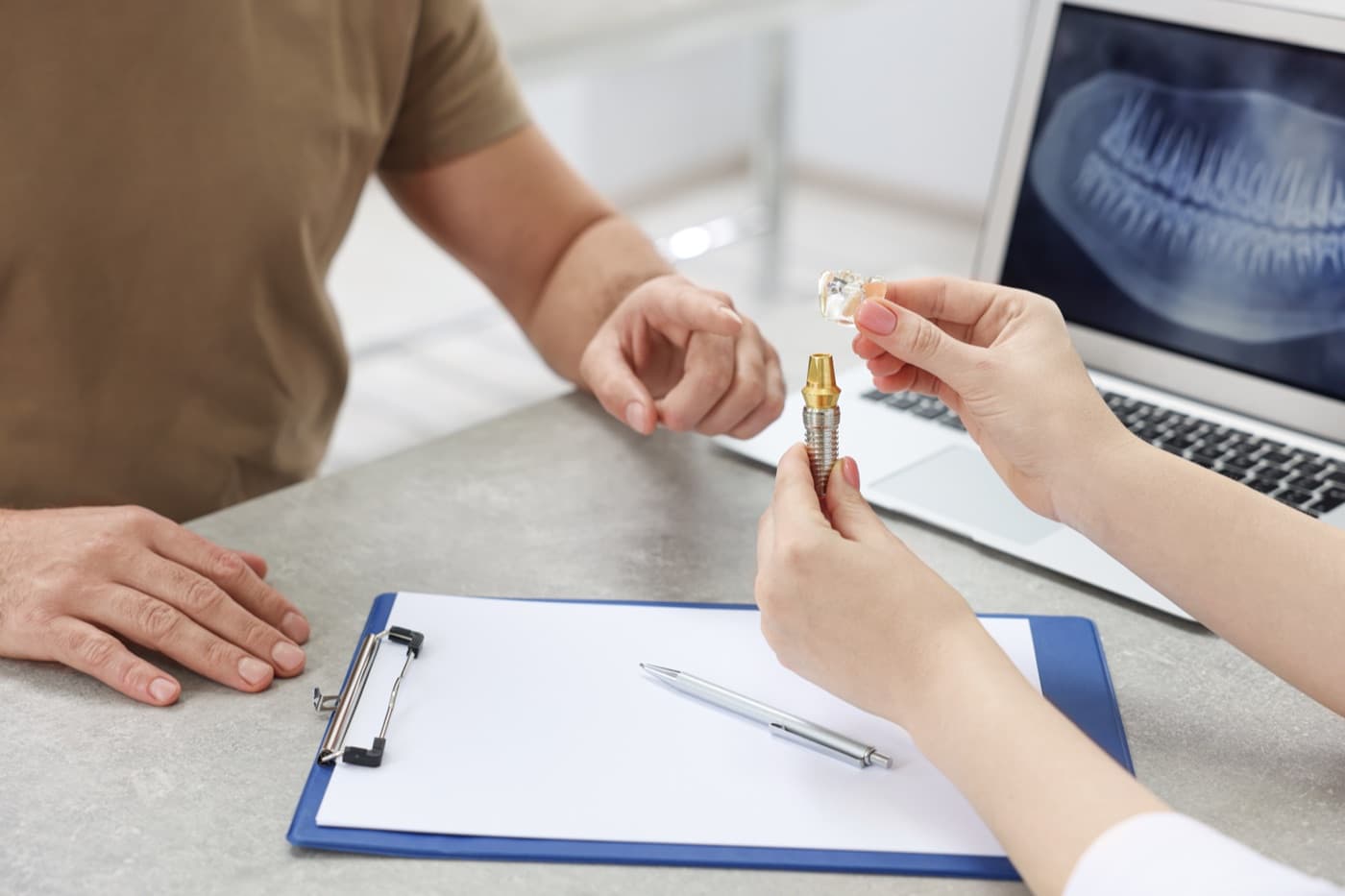
Why Your Surgeon Might Recommend Bone Grafting Before an Implant
5 minute read
DRAFT — pending clinical review v1.0-draft Clinical reviewer (to be assigned)
Implants need enough healthy bone to hold them. When bone is thin or missing, grafting rebuilds the foundation. Here is how that works.
The foundation problem
An implant is only as stable as the bone around it. When a tooth is lost, the bone that once anchored its root no longer has a job, and the body gradually remodels it. Gum disease, infection, injury, or long-standing tooth loss can all leave a site with less bone than an implant needs.
Bone grafting is the answer to that foundation problem. It rebuilds volume where bone has thinned so an implant can be placed in a position that serves the final tooth well — not merely wherever bone happens to remain.
If the idea of adding bone sounds daunting, it may help to know that grafting is among the most routine procedures in implant care. Surgeons plan for it regularly, and for many patients it is the difference between an acceptable implant position and an ideal one.
What a bone graft actually is
A graft is material placed into or onto the jaw that acts as a scaffold. Your own body does the real work: new bone cells grow into and through the graft, gradually replacing it with living bone. Graft material can come from several sources, and your surgeon will discuss which type suits your situation.
Grafting procedures range from small — placing material into a socket at the time of an extraction to preserve the ridge — to more involved rebuilding of a larger area. The scale depends entirely on what your site needs.
You may hear different terms for graft sources: material from your own body, processed donor bone, animal-derived material, or synthetic substitutes. Each has an established place in surgical care. What matters is matching the material and technique to the job your site requires — a judgment your surgeon will explain in plain terms.
Common situations where grafting comes up
Socket preservation is done when a tooth is removed and an implant is planned for later, keeping the site from collapsing inward while it heals. Ridge augmentation rebuilds width or height in an area where bone has already receded.
In the upper back jaw, the sinus sits close to where implants go. A sinus lift gently raises the sinus membrane and adds graft material beneath it, creating enough bone height for an implant. Your surgeon will determine from your imaging whether any of these apply to you.
Each of these has its own name and its own purpose, but they share a single logic: put healthy bone where the implant needs it, before asking that bone to carry a tooth for the long haul.
How grafting fits into your implant timeline
Sometimes grafting and implant placement happen during the same procedure. Other times the graft needs to mature first, and the implant follows in a later visit. Neither path is better in the abstract — the right sequence depends on the size of the graft and the stability the site can offer.
Healing time varies by patient and procedure, and your surgeon will give you a personal timeline. What matters is that each stage builds on a stable result from the one before it.
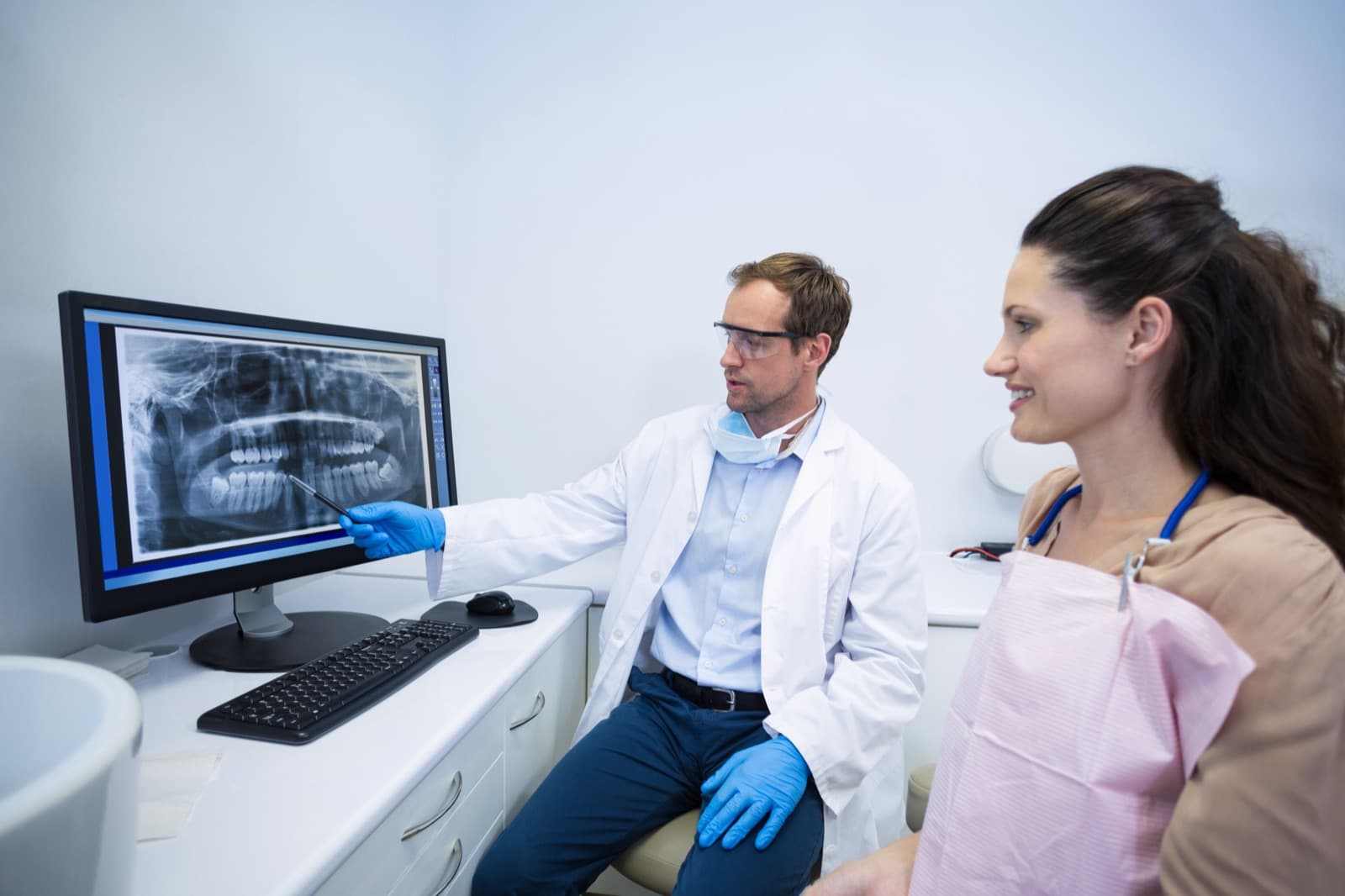
Your imaging plays referee here. Follow-up scans or films let your surgeon see how the graft is maturing and confirm that the site is ready before the implant goes in, rather than guessing from what the surface looks like.
What patients tend to notice
Many patients are surprised that grafting feels less dramatic than it sounds. Aftercare focuses on protecting the site: gentle hygiene, avoiding disturbance of the area, and following the written instructions you are given.
If your surgeon recommends grafting, it is because your final result depends on it. This article is general education — whether grafting is right for you is a question your own imaging and examination will answer.
Common questions
Does everyone need a bone graft before an implant?
Where does bone graft material come from?
Will grafting delay my implant?
This article is general education, not personal medical advice. It cannot account for your health history or imaging, and it never replaces the evaluation and written instructions you receive from your surgeon.

Ready to talk through your plan?
Request a consultation and our team will follow up to schedule your visit.