
Technology that serves the plan
We invest in imaging and digital planning for one reason: they let your surgeon see more, plan more precisely, and explain your situation to you clearly. Here is what that means in practice.
Seeing clearly
Detailed imaging, better decisions
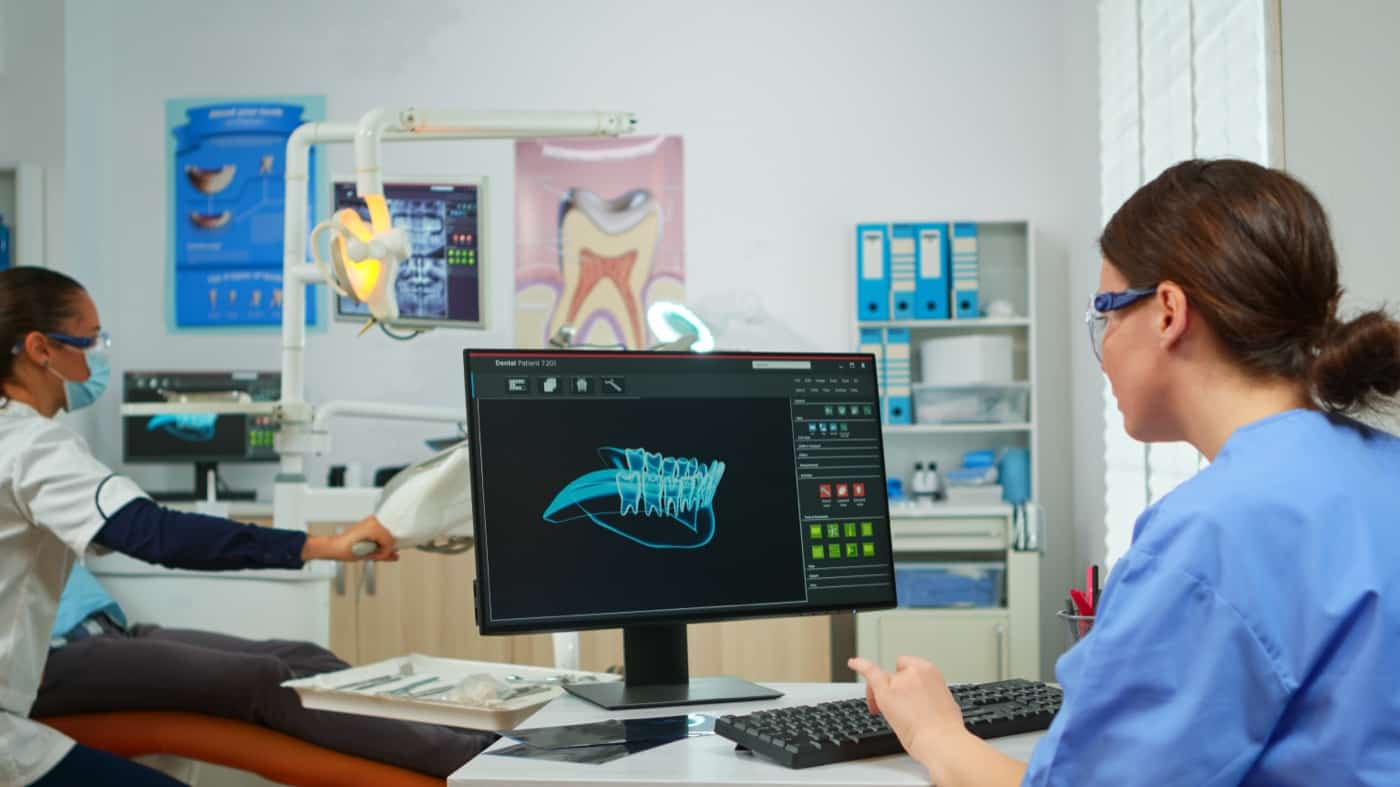
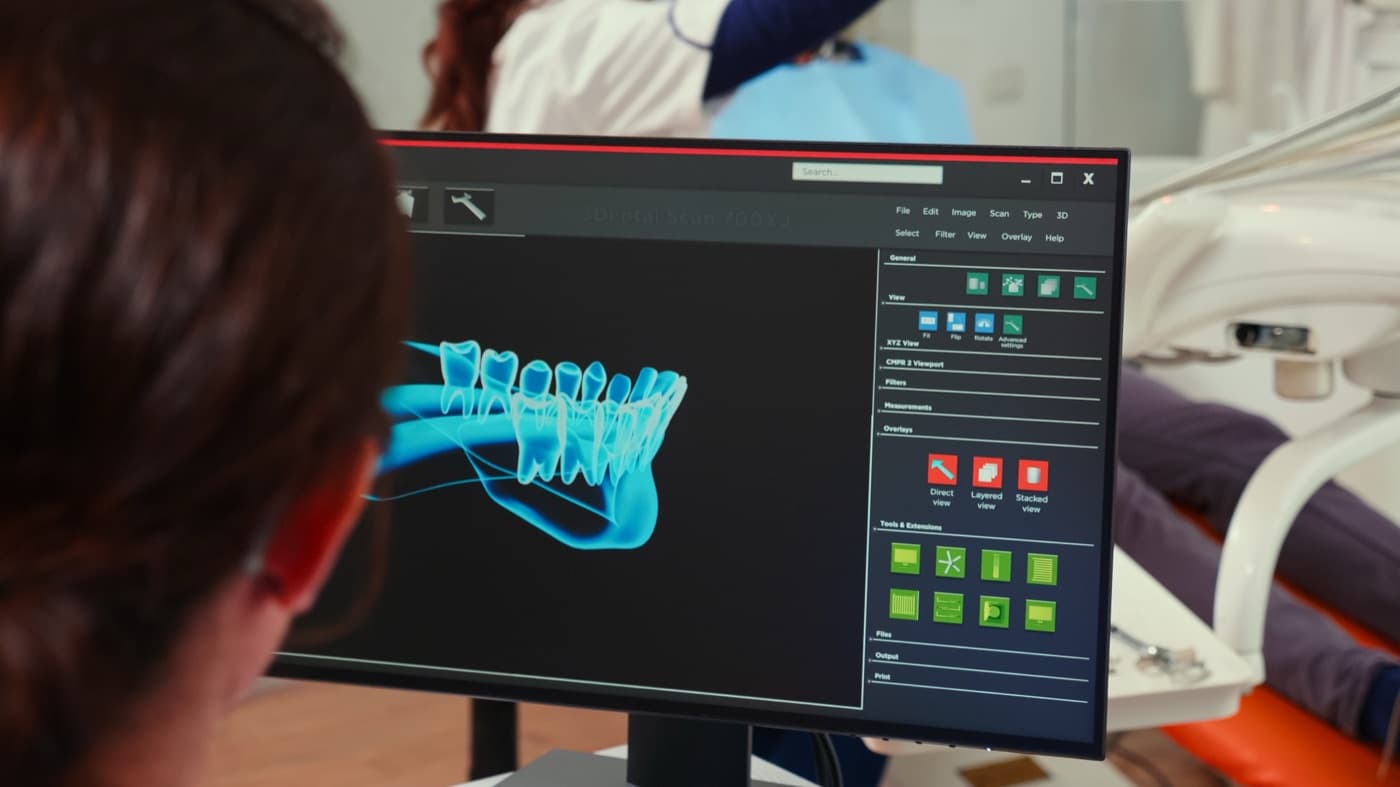
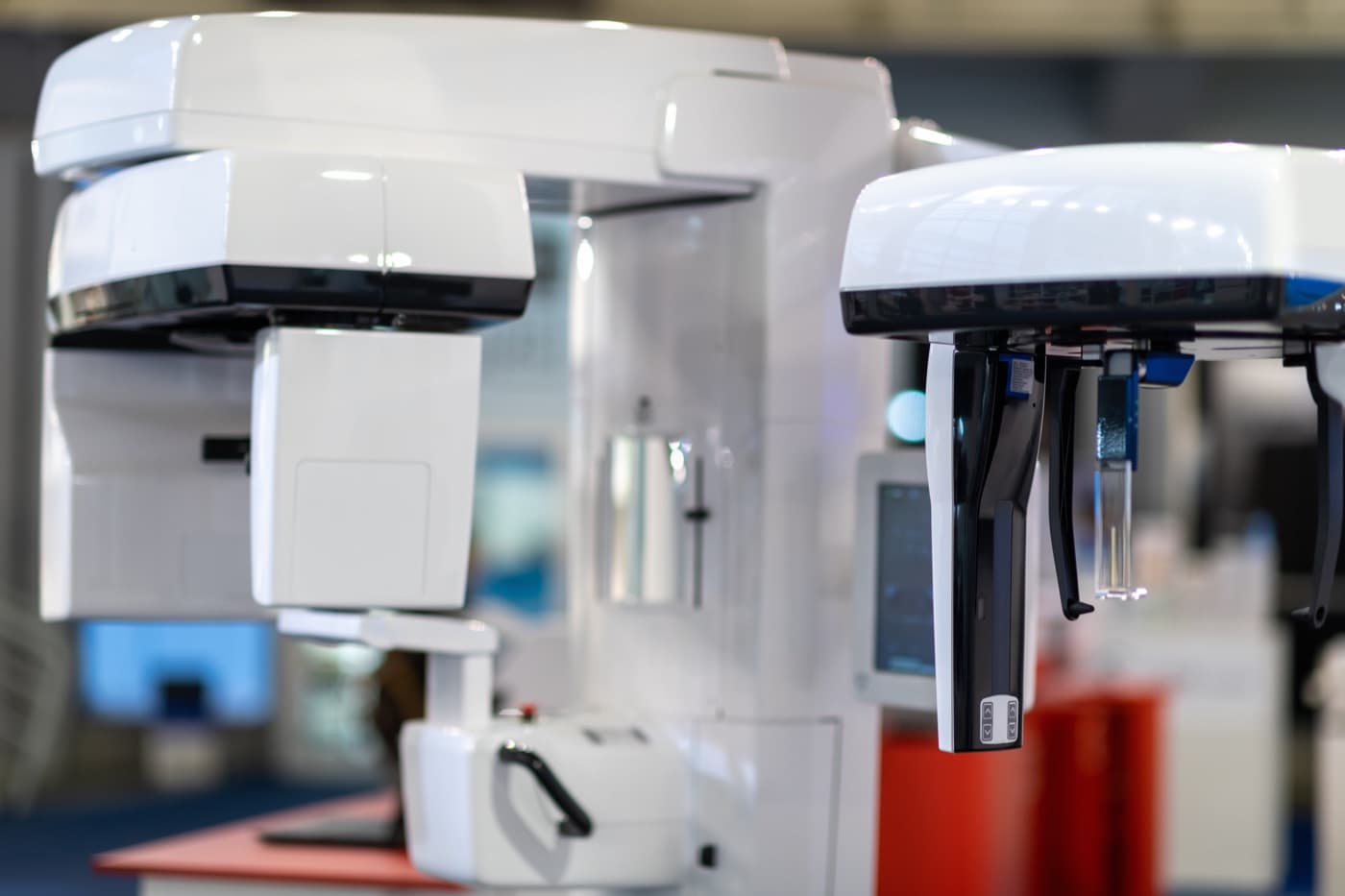
Much of oral surgery happens around structures you cannot see from the outside — nerves, sinuses, tooth roots, and the varying shape of your bone. Three-dimensional imaging shows your surgeon this anatomy in detail before any procedure begins.
For you, that translates into concrete benefits: recommendations based on measurement rather than estimate, procedures planned around your specific anatomy, and consultations where you can actually see what your surgeon is describing.
How 3D imaging works
Planning digitally
From image to plan
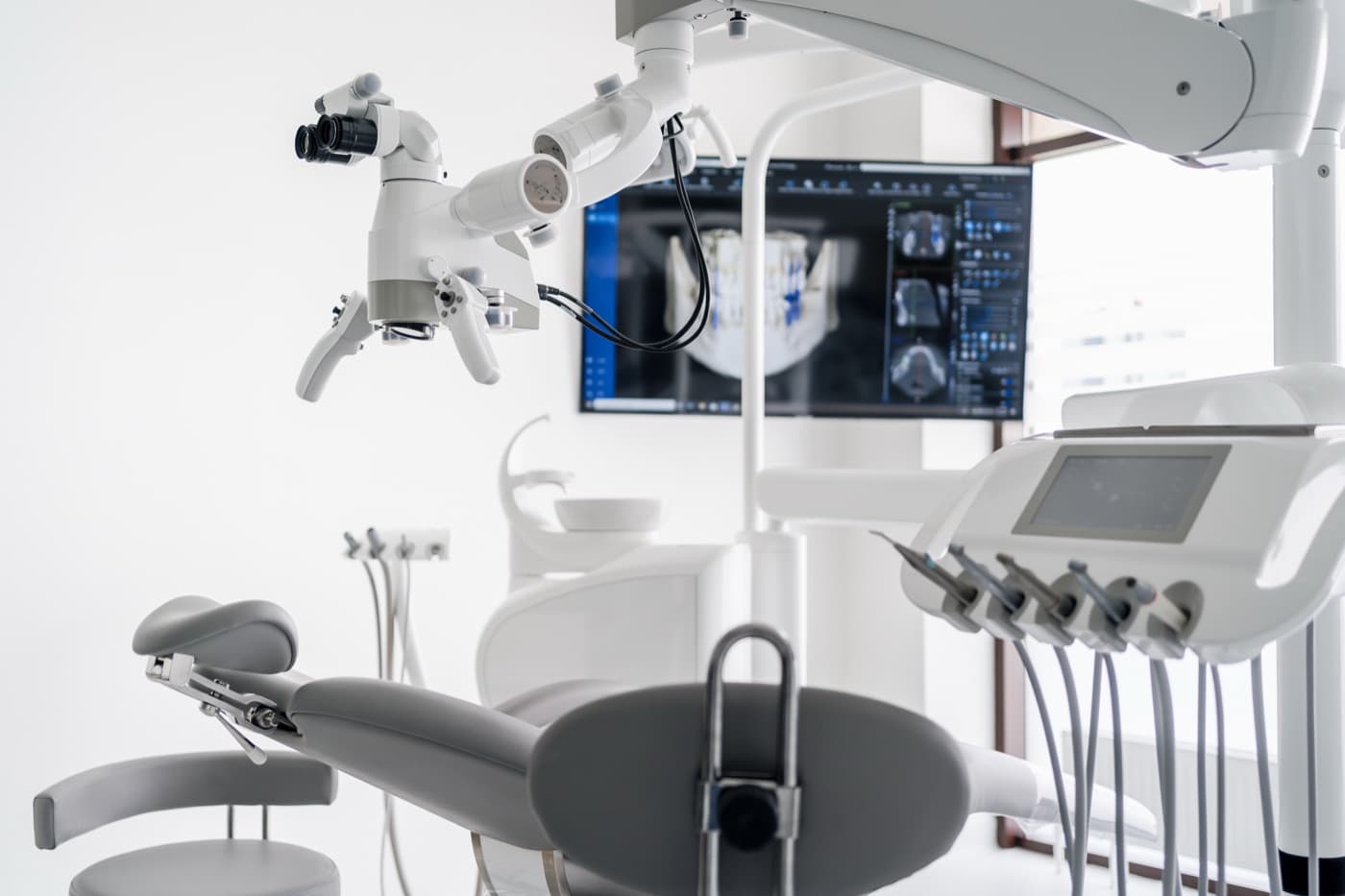
Digital planning tools let your surgeon work out procedures — implant positions, grafting needs, surgical approaches — on your imaging before your visit, and coordinate the plan with your restorative dentist or orthodontist from the same records.
The patient-facing payoff is a smoother journey: fewer surprises during surgery, clearer estimates, and a care team working from one shared plan rather than separate impressions.
Technology in service of your plan.
We invest in imaging and digital planning for one reason: they let your surgeon see more, plan more precisely, and explain your situation to you clearly.
The payoff is a smoother journey — fewer surprises during surgery, clearer estimates, and a care team working from one shared plan rather than separate impressions.
Specific equipment
What we use in the office
See your own anatomy, explained
At your consultation, imaging is not just collected — it is walked through with you, in plain language.