
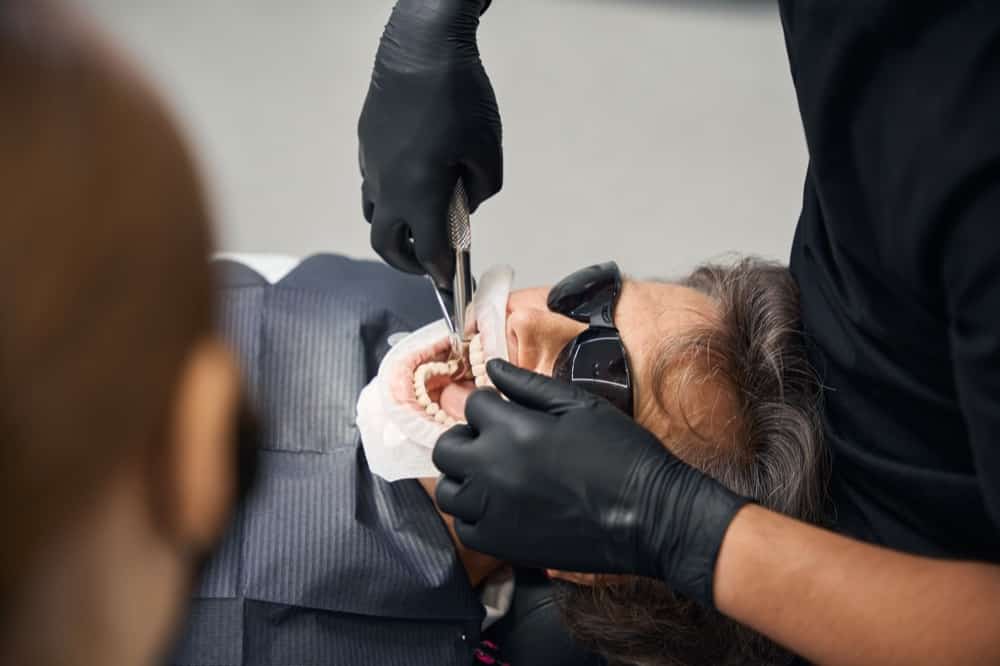
Noticed a spot or sore that isn't going away?
Most changes in the mouth turn out to be minor — irritation, a bite injury, a common benign condition. Getting a persistent change evaluated is how you find out for sure, and finding out early is always the better path.
When to come in
Changes worth having evaluated
You do not need to diagnose anything yourself. A simple rule works well: a change that persists beyond about two weeks deserves a professional look.
A sore that isn't healing
An ulcer or sore spot that lingers instead of resolving like a normal bite or burn would.
White or red patches
Flat or slightly raised patches on the gums, tongue, cheek, or floor of the mouth.
A lump or thickening
A new bump or firm area you can feel with your tongue or finger.
Unexplained bleeding
An area that bleeds without an obvious cause.
Numbness or altered feeling
A patch of the mouth or lip that feels different than it used to.
Something your dentist flagged
Many lesions are first noticed at routine dental visits — referral to us is a normal next step, not a cause for panic.
Being evaluated promptly is not overreacting — it is the recommended response, and in most cases it ends with reassurance.
The visit
What evaluation and biopsy involve
A biopsy sounds bigger than it usually is. Here is the typical path.
Examination
Your surgeon examines the area and your health history, and may review imaging.
Honest assessment
Some findings can be identified on sight; others need tissue analysis to be certain.
Biopsy, if needed
A small tissue sample is taken under local anesthesia — usually a brief, well-tolerated procedure.
Laboratory analysis
A pathologist examines the sample and reports the diagnosis.
Results & plan
We contact you to discuss results and next steps, and coordinate with your dentist or physician.
Depending on the size and location of the area, the biopsy may sample part of the lesion or remove it entirely. The site typically heals like a small surgical wound, with simple written aftercare instructions.



Clarity instead of a lingering question.
Most changes in the mouth turn out to be minor. Getting a persistent change evaluated is how you find out for sure, and finding out early is always the better path.
Whatever the finding, your surgeon explains what it means in plain language — and if it is benign, as most are, you leave with clarity instead of a lingering question.
Afterward
How you'll hear about results
Waiting for results is often the hardest part, so we are direct about the process: we tell you at your visit how and roughly when results will be communicated, and we contact you when they arrive — you will not be left wondering. Whatever the finding, your surgeon explains what it means in plain language and what, if anything, happens next.
If follow-up care is needed, we coordinate directly with your dentist or physician so your records and plan stay connected. If the finding is benign — as most are — you leave with clarity instead of a lingering question.
Between visits, changes that are rapidly worsening — spreading swelling, difficulty swallowing or breathing — are a different category: see emergency guidance.
Get it looked at
A short evaluation replaces weeks of wondering. Request a visit and we will take it from there.