
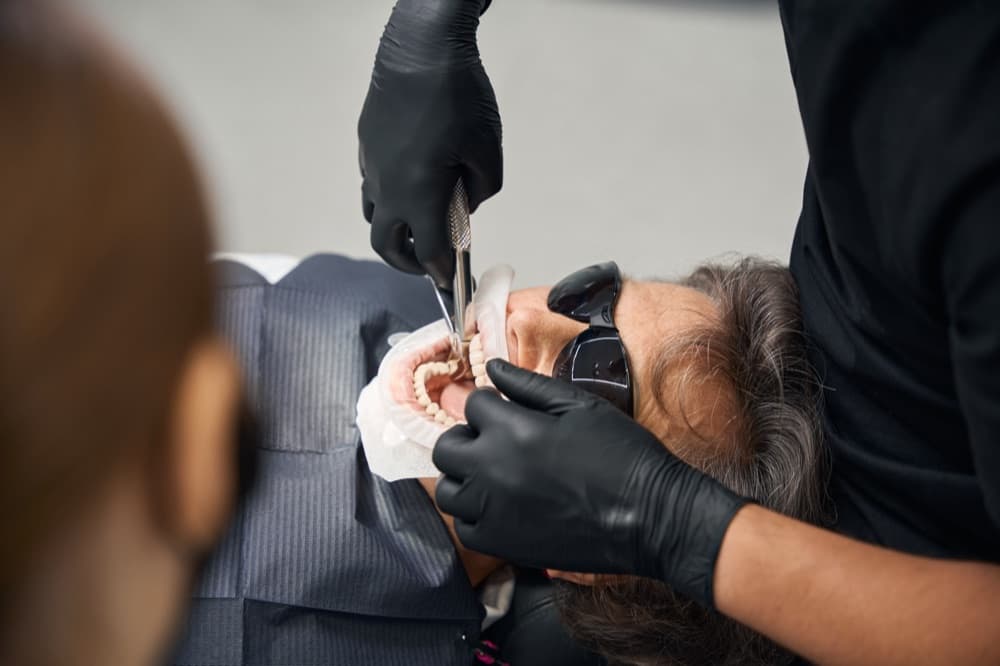
Protecting a Healing Surgical Site: Habits That Help
5 minute read
DRAFT — pending clinical review v1.0-draft Clinical reviewer (to be assigned)
The surgical site does most of its healing on its own — your job is to protect it. Gentle habits and a little patience go a long way.
Your body does the healing — you protect the site
After oral surgery, your body immediately begins a remarkable repair process. A protective clot forms, tissue starts to rebuild, and over time the area closes and strengthens. You cannot speed this process up, but you can protect it — and that is where good habits matter.
The written instructions your surgeon gives you are the definitive guide for your specific procedure, and they always supersede general advice. What follows are the broad principles behind those instructions, so the 'why' is as clear as the 'what.'
It helps to think of the surgical site as a construction zone. The real work is happening below the surface, and your role is to keep traffic away while it proceeds. Most protective habits ask very little of you — they are mostly about not doing things — which is why a smooth recovery is often less about effort and more about restraint.
Be gentle with the area
The early clot at a surgical site is delicate, and disturbing it can set healing back. That is why surgeons generally advise against poking the area with your tongue or fingers, vigorous rinsing or spitting, and drinking through straws. Suction and pressure are the main enemies of a settling clot.
Chewing away from the surgical site is another simple protection. Favoring the other side of your mouth keeps food and force off the healing area while still letting you eat comfortably.
Sneezing and nose-blowing deserve a mention for some procedures, particularly those involving the upper jaw: your instructions may ask you to avoid building pressure in ways you would not otherwise think about. If your written guidance includes cautions like these, they exist for a reason specific to your surgery, so follow them even when they feel fussy.
Keep your mouth clean — carefully
A clean mouth supports healing, but cleaning must be done gently around a surgical site. Your instructions will explain when and how to resume brushing near the area and whether any specific rinsing routine applies to you.
The general principle is balance: keep the rest of your mouth on its normal hygiene routine while treating the surgical area with extra care until your surgeon tells you it can handle normal attention again.
Avoid smoking and tobacco
Smoking and other tobacco use work against healing in multiple ways: the suction of inhaling can disturb the clot, and tobacco itself interferes with the tissue repair your body is trying to do. If there was ever a compelling moment to pause tobacco use, recovery from oral surgery is it.
If quitting or pausing feels difficult, tell your surgeon before your procedure. This is a common conversation, and your care team can help you plan for it without judgment.
The same reasoning applies to vaping: the suction of inhaling is exactly the kind of pressure a healing site needs to avoid, so switching from cigarettes to a vape does not sidestep the problem. Your written instructions will tell you what applies to your situation and for how long — and the office can talk through options if abstaining feels like a genuine struggle.
Watch, but do not obsess
It is natural to be curious about a healing site, but frequent checking in the mirror — especially if it involves stretching your mouth or touching the area — can do more harm than good. Trust the process and the trend of your comfort.
If something concerns you — an odd taste, increasing tenderness, or anything that seems to be moving in the wrong direction — call the office. For severe symptoms such as uncontrolled bleeding or rapidly spreading swelling, call 911 or go to the nearest emergency room. This article is educational; your surgeon's written instructions govern your care.
Common questions
What disturbs a healing site the most?
When can I brush normally near the site?
This article is general education, not personal medical advice. It cannot account for your health history or imaging, and it never replaces the evaluation and written instructions you receive from your surgeon.


Ready to talk through your plan?
Request a consultation and our team will follow up to schedule your visit.